

Table of Contents
- Why Roast Profile Matters More Than Caffeine Content for Long Shifts
- Caffeine Management for Night Shift: Timing, Half-Life, and Avoiding the Crash
- Best Brewing Methods for Long Shifts: Drip, Cold Brew, and Immersion
- How to Keep Coffee Hot During Long Shifts Without Ruining the Flavor
- Best Wholesale Coffee for Offices: Subscription and Bulk Buying Options
- Single-Origin vs. Blends for Daily Consumption on the Job
- Equipment Portability and Hydration for Shift Workers
- Conclusion: Choosing the Best Specialty Coffee for Long Shifts
- Frequently Asked Questions
Last Updated: September 25, 2026
Why Roast Profile Matters More Than Caffeine Content for Long Shifts
The best specialty coffee for long shifts is not the highest-caffeine option on the shelf. It is a medium-dark or dark roast with low acidity, a balanced flavor profile, and enough body to stay drinkable through hour twelve. At Mainline Roastery, we roast to order and ship the same day, because freshness does more for sustained energy than any caffeine number on a bag.
Here is the part most guides miss: caffeine content barely varies between roast levels. What changes is the roast profile, and that profile decides whether your stomach survives the shift.
The FDA's guidance on caffeine and how much is too much puts 400 mg per day as a general ceiling for healthy adults. A 12 oz mug of drip coffee lands somewhere in the middle of that range. Chasing more caffeine past that line buys you jitters, not alertness.
Dark Roast vs. Light Roast: Acidity, Stomach Stress, and Sustained Energy
Dark roast wins for long shifts because the longer roast time breaks down more of the acids that irritate the stomach. Light roasts keep more of those compounds, which is why a bright, fruity pour-over can leave you reaching for antacids by hour six.
That trade-off has a cost. Dark roasts lose some of the delicate flavor notes that make light roasts interesting, so you get chocolate and caramel instead of citrus and berry. For a shift worker drinking three or four cups, that is a fair trade.
Roast profile is the sum of time, temperature, and development the beans go through in the roaster. It determines acidity, body, and how the coffee sits in your gut.
Caffeine Management for Night Shift: Timing, Half-Life, and Avoiding the Crash
Caffeine management for night shift comes down to one number: the half-life. In most healthy adults, the half-life of caffeine runs roughly 4 to 6 hours. That means half of what you drink at 8 p.m. is still circulating at 2 a.m., and a quarter of it is still there at 6 a.m. Drink too late and you wreck your off-shift sleep, which makes the next shift harder and deepens the debt.
The mechanism matters more than the number. Caffeine does not create energy. It blocks adenosine, the compound that builds up in your brain the longer you stay awake and creates the pressure we call sleepiness. Caffeine parks in the adenosine receptors so the pressure cannot register. When the caffeine clears, all that adenosine is still waiting, which is why the crash feels sudden and heavy.
That is also why timing beats strength. A steady, front-loaded schedule keeps adenosine blocked through the hours you need to be sharp, then lets it clear before you want to sleep.
The 2-Hour Coffee Rule and the 15-15-15 Strategy
Two variables change the math. First, genetics. Some people carry a variant that slows caffeine clearance, so a 6-hour half-life can stretch closer to 8 or 9. If you are wired at 3 a.m. after a single afternoon cup, you likely fall in that group. Second, medications and smoking. Certain drugs speed or slow the enzyme that breaks caffeine down, so check with a pharmacist if you take daily medication.
Best Brewing Methods for Long Shifts: Drip, Cold Brew, and Immersion
Drip and cold brew are the two best brewing methods for long shifts. A drip machine gives you volume and speed for a full thermos. Cold brew gives you a smooth finish and lower acidity that holds up for hours without turning bitter.
Cold Brew for Extended Energy and Smooth Finish
Cold brew is the shift worker's secret weapon. Steep coarse grounds in cold water for 12 to 18 hours, then dilute to taste. The result is a low-acid concentrate that stays smooth even after sitting in a thermos for six hours.
How to Keep Coffee Hot During Long Shifts Without Ruining the Flavor
Keeping coffee hot during long shifts is a container problem, not a coffee problem. A vacuum-insulated stainless steel thermos holds temperature for hours. A glass carafe on a warming plate does not, and that plate slowly cooks the coffee into something bitter.
Best Wholesale Coffee for Offices: Subscription and Bulk Buying Options
The best wholesale coffee for offices balances freshness against volume. Buying in bulk saves money, but beans start losing flavor within a few weeks of roasting, so a giant order that sits in a supply closet for two months is a false economy.
This is where a subscription beats a one-time bulk purchase. Regular deliveries keep the supply fresh without anyone remembering to reorder.
Switchyard Blend Medium-Dark Roast →
| Buying Approach | Best For | Freshness Risk | Effort |
|---|---|---|---|
| One-time bulk order | Large teams, high volume | High after week 3 | Low |
| Recurring subscription | Offices of any size | Low | Low |
| Local roaster pickup | Teams near a roastery | Very low | Medium |
| Grocery store brands | Emergency backup | High | Low |
For offices that want a reliable supply without the guesswork, Mainline Roastery offers wholesale options built around freshly roasted beans and fast delivery.
Budget-Conscious Bulk Buying and Bean Freshness
The cheapest path to good office coffee is a subscription sized to your actual consumption, not your storage space. Track how many pounds your team goes through in a month, then order slightly under that.
Single-Origin vs. Blends for Daily Consumption on the Job
Blends are the better daily driver for most shift workers. A blend lets a roaster build a consistent, balanced profile that tastes the same bag after bag, which matters when you are drinking it every single day.
Single-origin beans showcase one region's flavor notes, and they are worth exploring. But they shift with each harvest, so the cup you loved in spring may taste different by fall.
Our take: keep a blend as your workhorse and a single-origin for days off. The Specialty Coffee Association's guidance on grades and quality explains why specialty grade matters more than the origin label alone.
Mainline Roastery's Switchyard Blend is a medium-dark roast with notes of bittersweet chocolate, toasted marshmallow, candied orange, and praline. It is built for exactly this: a bold, dependable cup that holds up from the first sip to the last.

Equipment Portability and Hydration for Shift Workers
Two things get ignored in every coffee guide for shift workers: gear you can actually carry and water you actually drink. Both decide whether hour ten feels manageable or miserable.
Portable Brewing Gear That Survives a Shift
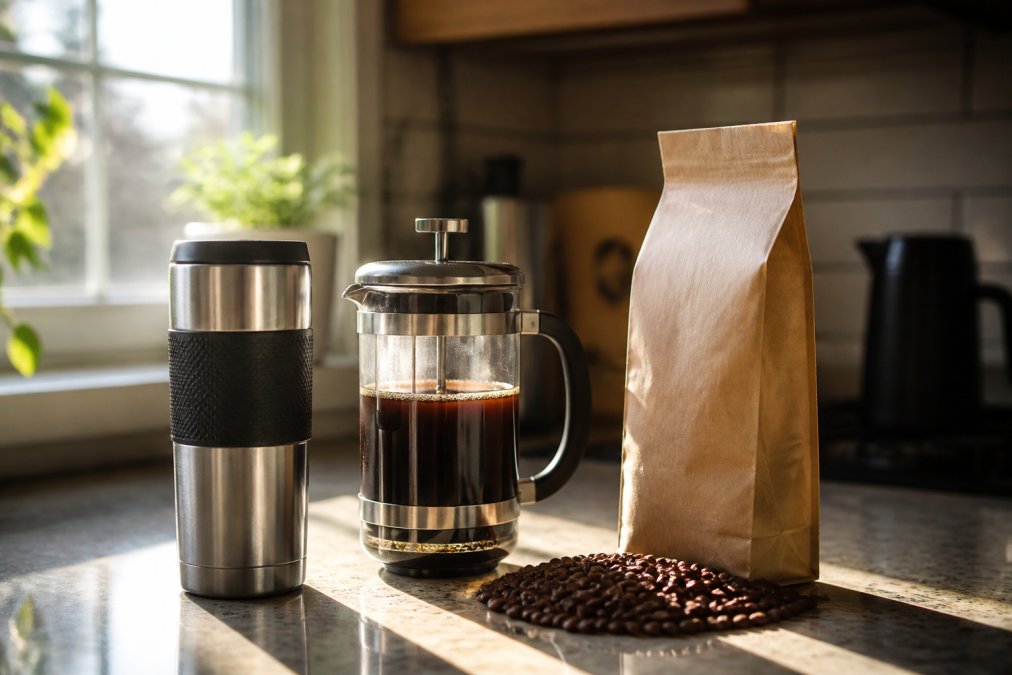
A vacuum-insulated travel mug is the non-negotiable piece. It holds temperature for hours and doubles as your brewing vessel if you use an immersion method.
Cost-Per-Cup Math for High-Volume Drinkers
Shift workers drink more coffee than the average person, so cost-per-cup matters. A 12 oz bag of specialty whole bean at $17.99 yields roughly 16 to 18 cups at a standard 18-gram dose. That works out to about $1.00 to $1.12 per cup. Compare that to a $4 to $6 cafe drink, and brewing your own saves real money over a month of shifts.
Hydration and Electrolyte Balance on Long Shifts
A simple rule: for every cup of coffee, drink a glass of water. If you sweat through your shift, add electrolytes. Sodium, potassium, and magnesium are the three that matter most for shift workers, and a pinch of salt in your water bottle or a commercial electrolyte packet covers it.
Conclusion: Choosing the Best Specialty Coffee for Long Shifts
The best specialty coffee for long shifts is the one that keeps you steady without wrecking your stomach or your sleep. That means a medium-dark or dark roast, brewed by drip or cold brew, timed so the caffeine clears before you clock out.
Frequently Asked Questions
What is the 15-15-15 coffee rule for energy?
The 15-15-15 rule is a strategy some people use to manage caffeine intake. Pair it with water to stay hydrated.
How does specialty coffee differ from standard office coffee for long shifts?
Specialty grade coffee uses higher-quality beans with fewer defects, roasted in smaller batches and often shipped within days of roasting. Standard office coffee is usually pre-ground, older, and roasted darker to mask staleness. For long shifts, specialty coffee delivers a balanced profile and smooth finish that stays drinkable cup after cup, while old coffee turns bitter and flat within an hour of brewing.
Does high-caffeine specialty coffee help with night shift alertness?
Caffeine blocks sleepiness signals, but it does not replace sleep. For night shift work, timing matters more than total caffeine. A cup at the start of the shift and another around the midpoint works better than sipping all night.
How should you store specialty coffee for long-term office use?
Keep whole beans in an airtight, opaque container at room temperature, away from heat, light, and moisture. For bulk office orders, buy whole bean and grind fresh. A 12-ounce bag like Switchyard Blend stays fresh for about 2 to 4 weeks after the roast date if sealed properly. Buy in quantities you will finish within that window.