

Table of Contents
- What Makes a Coffee Flavor Profile Bold?
- How Coffee Roast Levels Shape Bold Flavor
- Coffee Flavor Profiles: A Framework for Curation
- Designing a Coffee Subscription Box Around Bold Flavor
- Best Cold Brew Beans for a Bold Flavor Profile
- Personalization, Dietary Needs, and Intensity Controls
- Retention and Feedback Loops for Subscription Success
- Frequently Asked Questions
Last Updated: October 7, 2026
What Makes a Coffee Flavor Profile Bold?
A bold flavor profile is a coffee's total sensory signature: high intensity, heavy body, low perceived acidity, and a long, lingering aftertaste. In coffee, boldness is not the same as bitterness.
That distinction matters more than most guides admit. Plenty of dark, harsh coffee tastes aggressive for thirty seconds and then disappears. A genuinely bold cup builds, holds, and finishes. At Mainline Roastery LLC, we roast to order and ship the same day because those three qualities fade faster than most people realize.
Defining Boldness in Coffee: Intensity, Body, and Aftertaste
Intensity is how concentrated the flavor reads. Body is the physical weight and texture in your mouth. Aftertaste is the finish, and it is the truest test of boldness.
A coffee can score high on one and low on the others. A light roast from a high-altitude farm might have sharp intensity but a thin body and a short finish.
| Element | What It Measures | Bold Signal | Weak Signal |
|---|---|---|---|
| Intensity | Concentration of flavor | Hits immediately, fills the palate | Faint, requires searching for notes |
| Body | Weight and texture | Coating, syrupy, substantial | Watery, thin, quick to clear |
| Aftertaste | Length of finish | Lingers 30+ seconds, evolves | Vanishes within seconds |
When you evaluate beans for a bold subscription, score each element separately. Most buyers only notice intensity, which is why so many "bold" boxes feel one-dimensional by month three.
How Coffee Roast Levels Shape Bold Flavor
Roast level is the single biggest lever you control over boldness. The longer beans stay in the roaster, the more sugars caramelize and the more the flavor shifts from origin-specific brightness toward deeper, heavier tones.
Light, Medium, and Dark: What Each Roast Delivers
Light roasts preserve origin character: fruity, floral, bright acidity, lighter body. Medium roasts balance origin notes with sweetness and a rounder mouthfeel. Dark roasts push toward chocolatey, nutty, smoky tones with heavier body and lower acidity.
Here is the practical trade-off most guides skip. Darker does not automatically mean bolder. Push too far and you roast away the complexity that made the bean interesting, leaving char and bitterness that reads as harsh rather than bold.
Coffee Flavor Profiles: A Framework for Curation
Coffee flavor profiles are the recognizable taste families a bean falls into: fruity, chocolatey, nutty, spicy, floral, and earthy. Curation is the work of sequencing those families so a box tells a story instead of shipping six random bags.
Building Flavor Progression and Balance in a Box
Think of each box as a short arc. Open with an approachable, mellow cup, move into something with more acidity or spice, then close with your heaviest, most chocolatey roast.
Balance also means contrast. If every bag is a dark, smoky blend, the palate goes numb and nothing feels bold anymore.
- Box of 3: one approachable, one bright or spicy, one heavy finisher
- Box of 4: add a wildcard single-origin to stretch the palate
- Box of 6: two per tier, alternating regions so no two bags share an origin
A single-origin product showcases one farm or region; a blend combines several for consistency and complexity. Use both. Blends give you reliable boldness, single-origins give subscribers discovery.
Designing a Coffee Subscription Box Around Bold Flavor
Designing a bold subscription box means matching bean selection, roast level, and box sequencing to a defined intensity standard, then repeating that standard every month. The method below is the one we would use to build a box from scratch.
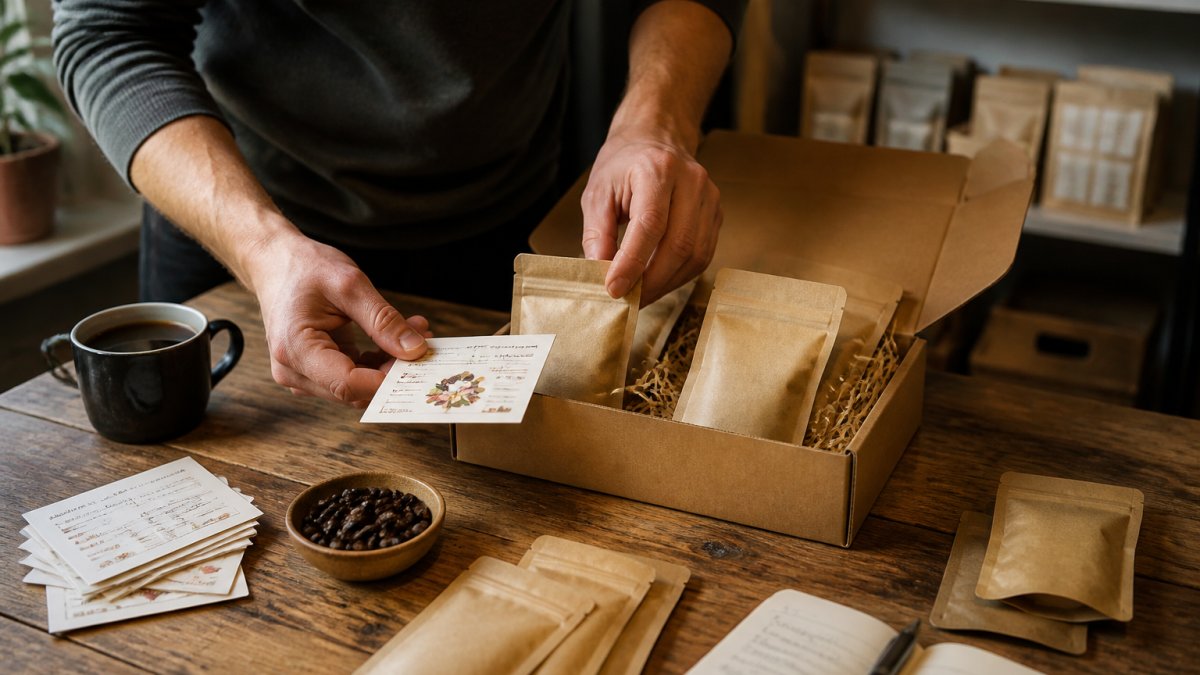
Step-by-Step: From Bean Selection to Box Assembly
- Define your boldness standard. Write down minimum scores for intensity, body, and aftertaste. Without a written standard, every month drifts.
- Select beans by origin and process. East African and South American beans, processed naturally and washed, give you both fruit-forward and chocolatey building blocks.
- Roast to medium-dark as your baseline. Adjust lighter only when a bean's origin character justifies it.
- Taste every lot before it ships. Reject anything that reads harsh rather than bold.
- Sequence the box. Order bags from approachable to heaviest using the progression above.
- Add tasting notes. Tell subscribers what to look for: aroma, first sip, finish.
- Ship fresh. Flavor peaks in the days after roasting and fades from there. Speed is part of the product.
Best Cold Brew Beans for a Bold Flavor Profile
Cold brew rewards bold beans more than any other method. The slow, cold extraction pulls sweetness and body while leaving behind much of the sharp acidity, so a medium-dark or dark roast with heavy body translates into a thick, chocolatey concentrate.
Look for beans with chocolatey, nutty, or praline tasting notes and a coarse grind. Our Switchyard Blend is built for exactly this: a medium-dark roast combining Caturra and Ethiopia Heirloom beans from East Africa and South America, with notes of bittersweet chocolate, toasted marshmallow, candied orange, and praline.

For cold brew, start coarse and use a longer steep. If the concentrate tastes flat, the grind was likely too fine or the beans too light. Boldness in cold brew comes from the bean, not from adding more grounds.
Personalization, Dietary Needs, and Intensity Controls
Personalization is what separates a subscription that survives past month two from one that gets cancelled. The mechanics are simpler than most operators think, but they have to be built into the product rather than bolted on as a survey at checkout.
Give Subscribers Three Real Controls
Give subscribers three controls: intensity level, caffeine preference, and flavor direction. Intensity should be a scale, not a binary. A workable five-point scale looks like this:
Switchyard Blend Medium-Dark Roast Coffee 12 oz →
| Level | What the subscriber tastes | Typical roast |
|---|---|---|
| 1, Mellow | Soft body, gentle sweetness, short finish | Light to medium |
| 2, Balanced | Round mouthfeel, clear origin notes | Medium |
| 3, Bold | Heavy body, layered finish, low perceived acidity | Medium-dark |
| 4, Intense | Coating body, long finish, deeper roast tones | Dark |
| 5, Maximum | Dominant roast character, minimal acidity | Dark, pushed |
Let subscribers move up or down one level per cycle. A jump of two or more levels usually produces a complaint, because the palate needs a step to adjust. Caffeine matters too: offer full-caffeine, half-caffeine, and decaf versions of at least one blend so subscribers who limit intake are not forced out of the bold tier entirely.
Flavor direction is the third control. Ask subscribers to rank three families, chocolatey/nutty, fruity/floral, and spicy/earthy, rather than picking one. A ranking tells you what to lead with and what to use as contrast, which a single pick cannot.
Dietary Needs, Allergens, and Substitutions
Dietary needs are mostly about what goes in the box alongside the coffee. In the United States, the nine major food allergens recognized under the Food Allergen Labeling and Consumer Protection Act are milk, eggs, fish, crustacean shellfish, tree nuts, peanuts, wheat, soybeans, and sesame, sesame was added by the Food Allergy Safety, Treatment, Education, and Research Act of 2021 (the FDA).
For coffee itself, note processing method, since naturally processed beans can carry different flavor compounds than washed ones, and some subscribers with sensitivities prefer to know. Offer a substitution path: if a subscriber flags an allergen, swap the snack or flavored item for a neutral alternative rather than dropping the box tier.
Adjustable Heat and Intensity
If your box includes spice blends, sauces, or heat-bearing products, ship heat on the side rather than pre-mixed. A packet of chili crisp or a spice sachet lets a subscriber dial heat up or down without changing the base product. Label heat on a simple scale, mild, medium, hot, extra hot, and print it on the item, not just the box card, because subscribers often split a box across weeks.
Retention and Feedback Loops for Subscription Success
Retention is the real scoreboard for any subscription service. A box that delights once but never adapts loses subscribers steadily, no matter how good the coffee is. The gap most guides miss is that retention is a set of measurable operating habits, not a vibe.
The Metrics That Actually Predict Churn
Track a small set of numbers every month. Four are enough to run the program:
- Repeat purchase rate, the share of subscribers who renew after their first paid cycle. A first-to-second renewal is the hardest step; watch it separately from later renewals.
- Monthly churn rate, cancellations divided by active subscribers at the start of the month. Small changes compound, so a one-point move is worth investigating.
- Skip rate, subscribers who pause rather than cancel. A rising skip rate often precedes a rising churn rate by one to two cycles.
- Average subscriber lifetime, total months retained, averaged across cohorts. Compare cohorts by signup month so you can see whether a change helped or hurt.
Pair those with two satisfaction signals: post-delivery rating (a simple one-to-five) and tasting-note engagement (whether subscribers open or respond to the notes card). Engagement is a quiet leading indicator, subscribers who stop reading notes usually stop tasting, and subscribers who stop tasting cancel.
Build Feedback Into the Product
Ask for a quick rating after each delivery, and act on it. A common pattern is a two-question prompt: overall rating, and one open field for what stood out. Keep it to two questions; longer surveys depress response rates.
Route the responses into the subscriber's profile. If a subscriber consistently rates bold boxes highest, shift their intensity default up one level.
When a subscriber skips, ask why before they cancel. A skip is a signal, not a loss.
Seasonal Rotation Without Forcing It
Seasonal selection keeps the experience fresh. Rotate in limited regional flavors and let subscribers opt into them rather than forcing them into every box. Forced seasonal items are a frequent complaint driver because they override the intensity and flavor controls the subscriber already set.
Freshness and value are the two things subscribers mention most when they stay, which is why same-day shipping from roast matters as much as the bean itself. A bold box that arrives stale is a cancelled box, regardless of how well it was curated.
Frequently Asked Questions
What makes a coffee flavor profile bold?
A bold flavor profile comes from high flavor intensity, full body, and a lingering aftertaste. Roast level matters: medium-dark and dark roasts develop bittersweet chocolate, toasted nut, and caramel notes that read as bold. Bean origin also plays a role, with naturally processed beans from East Africa and South America often delivering the fruity, chocolatey complexity that defines a bold cup.
Which coffee beans are best for a bold, full-bodied cup?
Look for medium-dark to dark roasts with natural or washed processing. Blends that combine Caturra and Ethiopia Heirloom beans, like the Switchyard Blend from Mainline Roastery, deliver bittersweet chocolate, toasted marshmallow, and candied orange notes with a smooth, full body. Single-origin beans from East Africa and South America also work well when you want a specific regional flavor.
Are dark-roast beans always stronger in flavor?
No. Dark roasts taste bolder because roasting develops bittersweet, smoky notes, but they can also lose the fruity and floral complexity of the original bean. A medium-dark roast often hits the sweet spot, keeping the bean's natural acidity and aroma while adding the rich, chocolatey depth that makes a bold flavor profile. The best choice depends on whether you want intensity or complexity.
How can I choose coffee beans for cold brew with a bold flavor?
For cold brew, choose medium-dark or dark roast beans with low acidity and strong chocolate or nutty notes. Coarse grind works best for cold brew, and a 1:15 coffee-to-water ratio is a solid starting point. Beans with natural processing tend to deliver sweeter, fruitier cold brew, while washed beans give a cleaner, more chocolatey cup.