

Table of Contents
- What Makes Coava Coffee Stand Out?
- Coava Coffee Alternatives: Roasters With Similar Flavor Profiles
- Quick Comparison: Roast Profiles and Brewing Methods
- How to Choose Specialty Coffee That Matches Your Taste
- The Best Coffee for Home Brewing: Grind Size and Freshness
- What Sets Specialty Coffee Roasters Apart From Big Brands
- Conclusion: Making the Switch From Coava
- Frequently Asked Questions
Last Updated: September 7, 2026
What Makes Coava Coffee Stand Out?
Coava coffee alternatives start with understanding what made the original Portland roaster so beloved in the first place. Coava built its reputation on meticulous single-origin sourcing, light-to-medium roast profiles that highlight terroir, and a commitment to freshness that home brewers could taste in every cup. Their beans are known for clarity, sweetness, and a clean finish that rewards careful brewing.
The challenge for home brewers is that Coava's distribution is limited, and their small-batch releases sell out quickly. When you cannot get your hands on their latest microlot, you need roasters who share that same obsessive approach to sourcing and roasting.
Specialty coffee roasters differentiate themselves through meticulous sourcing and roasting. A handful of roasters across the country deliver comparable clarity and freshness, often at more accessible price points and with faster shipping to your door.
Coava coffee alternatives are not about finding an exact clone. They are about identifying roasters who treat green coffee with the same respect, roast with intention, and ship beans fresh enough to actually taste the difference.
Coava Coffee Alternatives: Roasters With Similar Flavor Profiles
The search for Coava coffee alternatives comes down to matching two things: sourcing philosophy and roast style. Coava favors washed-process coffees from Ethiopia, Kenya, and Colombia, roasted light enough to preserve acidity but developed enough to avoid grassy or sour notes.
Single-Origin Specialists
Roasters who focus on single-origin offerings tend to produce the cleanest, most transparent cups. These operations buy directly from farms or through long-term import partnerships, and they roast in small batches to highlight each lot's unique character.
Look for roasters who publish harvest dates and roast dates on every bag. This transparency signals confidence in their sourcing and gives you the information needed to brew with intention. A washed Ethiopian Yirgacheffe from a specialist roaster will often show the same floral jasmine notes and lemon acidity that made Coava's Ethiopian offerings so memorable.
Bold Blend Architects
Not every day calls for a delicate single origin. Blends serve a different purpose: consistency, body, and a flavor profile engineered for milk or espresso. The best blend architects build coffees that taste intentional, not muddled, with distinct layers that hold up across brewing methods.
A well-constructed blend uses complementary origins, often pairing a chocolatey Brazilian base with a fruity Ethiopian component for brightness. These roasters understand that a blend should taste greater than the sum of its parts, delivering a cup that is balanced, forgiving, and satisfying whether you pull a shot or brew a batch.
Quick Comparison: Roast Profiles and Brewing Methods
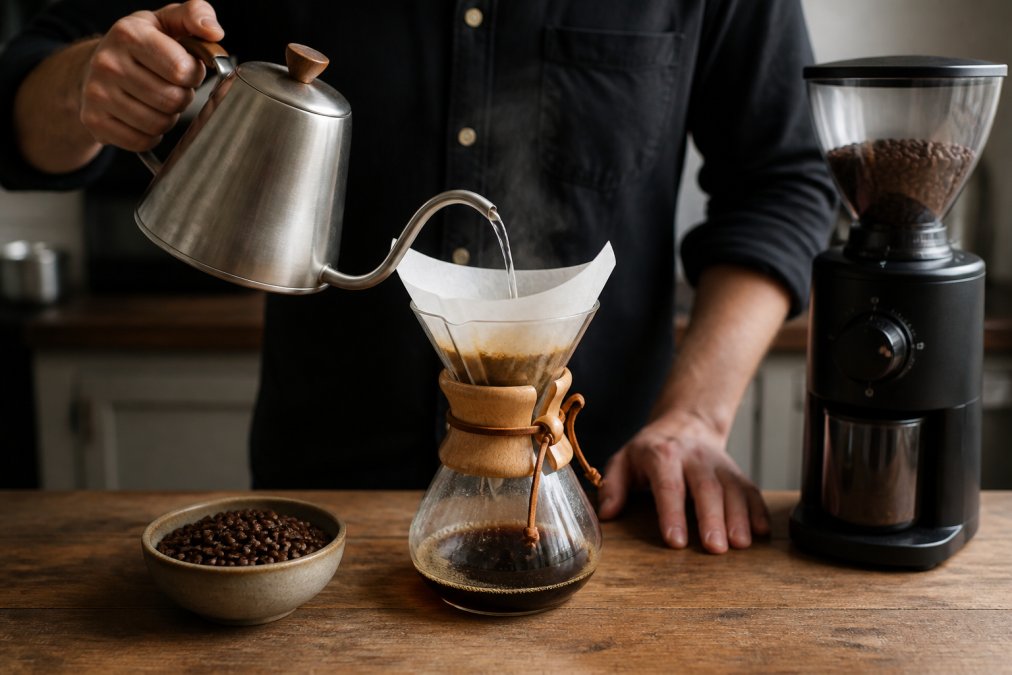
Matching a roast profile to your brewing method matters more than most home brewers realize. Light roasts shine with pour-over methods that highlight acidity and clarity, while medium roasts hold up better in immersion brewers and espresso machines where body and sweetness take priority.
| Roast Style | Best Brewing Method | Flavor Profile | Grind Size |
|---|---|---|---|
| Light | Pour-over (Chemex, V60) | Floral, citrus, tea-like | Medium-fine |
| Medium | French press, drip | Chocolate, caramel, balanced | Medium |
| Medium-dark | Espresso, moka pot | Molasses, spice, full body | Fine |
Light roasts require more careful extraction because they are denser and less soluble. Water temperature around 200°F and a slightly longer brew time will pull out the sweetness without tipping into bitterness (sca.coffee). Medium roasts are more forgiving, which is why many home brewers default to them when dialing in a new bag.
The roast profile also determines how the coffee ages. Light roasts peak a few days after roasting and fade faster, while darker roasts hold their flavor longer. This matters when you buy in bulk or subscribe to a monthly delivery.
How to Choose Specialty Coffee That Matches Your Taste
Choosing a Coava alternative is less about finding a clone and more about mapping your palate to a new roaster's style. The most useful approach is a taste-matching matrix that translates the flavor notes you already love into specific origins, processes, and roast levels.
If You Like Coava's Light Roasts, Try These Flavor Profiles
Coava's signature is clarity and sweetness. If you are drawn to that, you are likely chasing specific tasting notes. Here is how to translate those preferences into a purchasing decision:
- If you love floral and jasmine notes: Look for a washed-process Ethiopian Yirgacheffe or Guji. These coffees are the benchmark for tea-like aromatics and bright, citric acidity. A roaster who offers a single-origin from the Gedeb or Yirgacheffe woredas is a strong starting point.
- If you prefer stone fruit and berry sweetness: Seek out a natural-process Ethiopian or a Kenyan AA. Natural-process coffees ferment with the fruit intact, producing intense strawberry or blueberry notes. Kenyan coffees, often washed, deliver a complex, savory-sweet profile with notes of blackcurrant and tomato.
- If you want chocolate and nut without the dark roast: Colombian coffees from the Huila or Nariño regions are your best bet. These are often washed, with a balanced acidity and a clean, caramel-like sweetness that reads as "chocolatey" without the bitterness of a dark roast.
The Process Matters as Much as the Origin
The processing method is the single biggest determinant of flavor after the varietal itself. Washed coffees (also called wet-processed) produce the cleanest, most transparent cups, highlighting the bean's intrinsic acidity and terroir. Natural-processed coffees amplify fruit and fermentation notes, often resulting in a heavier body and a more intense, sometimes winey, cup. Honey-processed coffees sit in between, offering the body of a natural with the clarity of a washed.
If you are a black coffee drinker who values the "clean finish" Coava is known for, prioritize washed-process coffees. If you are adding milk, a natural-processed coffee's heavier body will hold up better.
A Practical Decision Tree for Your Next Bag
Instead of guessing, use this framework when evaluating a new roaster's menu:
- Identify your default brew method. Pour-over drinkers should prioritize light roasts. Espresso and French press drinkers have more flexibility, but medium roasts often perform best.
- Define your preferred acidity. Do you want a bright, sparkling cup (look for high-altitude, washed African coffees) or a rounder, more mellow cup (look for Brazilian or Sumatran beans)?
- Check the roast date, not the "best by" date. A bag roasted 3 weeks ago is already past its prime for pour-over (peer-reviewed research). Look for a roast date within the last 10 days.
- Read the roaster's tasting notes critically. If a roaster describes a coffee as having "black tea" and "lemon zest," expect a light roast with high acidity. If they say "dark chocolate" and "molasses," expect a fuller body and lower acidity.
This approach turns the search from a random guess into a targeted selection based on the sensory experience you are seeking. It is the same logic a sommelier uses to recommend a wine, and it is the most reliable way to find a new daily driver that satisfies the same cravings Coava did.
The Best Coffee for Home Brewing: Grind Size and Freshness
The best coffee for home brewing is freshly roasted, properly ground, and matched to your equipment. Whole beans preserve volatile aromatic compounds that begin dissipating within minutes of grinding, which is why buying whole and grinding at home makes a measurable difference in cup quality.
Grind size determines extraction rate. Too coarse and you get under-extracted, sour coffee. Too fine and you get bitter, over-extracted coffee. A burr grinder gives you consistent particle size, which is essential for even extraction. Blade grinders produce uneven grounds that lead to muddy, inconsistent cups.
Freshness extends beyond the roast date. How you store beans matters almost as much as when they were roasted. Keep beans in an airtight container away from light, heat, and moisture. Do not refrigerate or freeze daily-use beans, as condensation degrades flavor.
For home brewing, a good starting point is a ratio of 60 grams of coffee per liter of water, adjusted to taste. Dial in your grind until the brew time falls within the recommended window for your method, then fine-tune based on flavor rather than following a rigid recipe.
What Sets Specialty Coffee Roasters Apart From Big Brands
The gap between specialty roasters and big brands is not just about flavor; it is about how the final cup interacts with your body. For many coffee drinkers, the switch away from a specific roaster like Coava is driven by more than just availability, it is often about managing caffeine sensitivity, acid reflux, or sleep quality.
The Acidity and Stomach Comfort Factor
Big-brand coffees are often roasted darker to ensure shelf stability and a consistent, bitter profile that masks defects. This darker roast produces more of the compounds that can trigger stomach irritation and acid reflux in sensitive individuals. Specialty roasters, particularly those focusing on light-to-medium roasts like Coava, preserve more of the coffee's natural chlorogenic acids, which can be gentler on the stomach for some, but also more acidic on the palate.
If you are switching due to GERD or general stomach discomfort, the choice is not simply "specialty vs. big brand." It is about bean origin and roast level. Low-acid coffee options, such as those from Brazil or Sumatra, or beans that have been steam-processed to reduce acid, are often better tolerated. Many specialty roasters now offer specific low-acid single origins, which is a level of control that mass-market brands rarely provide.
Caffeine Content and the Jitters
A common misconception is that dark roasts have more caffeine. In reality, caffeine is relatively stable during roasting, but the bean's density changes. By volume, a scoop of dark roast has slightly less caffeine than a scoop of light roast because the beans are less dense. However, by weight, they are nearly identical.
For those switching to manage anxiety or jitters, the more significant variable is serving size and brew strength. A light-roast pour-over can deliver a clean, focused energy without the crash associated with over-extracted, bitter coffee. The specialty model encourages brewing at a specific ratio (like 60g/L) to avoid over-extraction, which is a practical mechanism for controlling your caffeine intake and reducing the likelihood of a spike-and-crash cycle.
A DIY Path: The Budget-Friendly Alternative
Beyond buying from another roaster, there is a growing movement toward DIY coffee alternatives that mimic the ritual without the caffeine or acidity. This is a gap most product-focused articles ignore. For home brewers who love the process but need a break from coffee, the following are simple, pantry-based substitutes that can be prepared with the same gear you already own:
- Dandelion Root and Chicory Blend: Roasted dandelion root and chicory are the classic coffee substitutes. They brew similarly to coffee, producing a dark, rich cup with a bitter, roasted flavor. You can buy them pre-roasted and ground, or roast the roots yourself in a dry skillet until they are dark and fragrant. Brew them in a French press at a 1:15 ratio for a surprisingly coffee-like cup.
- Roasted Barley (Barley Tea): Mugi-cha, or roasted barley tea, is a staple in East Asia. It has a toasty, nutty flavor with no bitterness. It is naturally caffeine-free and can be brewed as a cold brew or hot tea. It is a forgiving, low-acid option that is incredibly cheap to make at home.
- Spiced Herbal Infusions: A blend of roasted chicory, carob powder, and a pinch of cinnamon or cardamom can be brewed in a drip machine. Carob provides a natural sweetness and a chocolatey note, while chicory adds the bitter coffee edge. This is a highly customizable route that lets you dial in a flavor profile that matches your old favorite.
These DIY options are not just for those avoiding caffeine; they are also excellent for individuals with IBS who find that even specialty coffee's acidity triggers symptoms. The specialty coffee industry's focus on single-origin transparency is excellent, but for a segment of the population, the goal is not a better cup of coffee, it is a better cup that is not coffee at all.
Conclusion: Making the Switch From Coava
Switching from Coava does not mean settling for less. The specialty coffee landscape is full of roasters who share the same commitment to transparent sourcing and precise roasting, and many of them ship faster and offer broader selections.
Research on coffee brewing best practices from the UC Davis Coffee Center reinforces that freshness and grind quality are the two variables home brewers control that most affect cup quality. Choosing a roaster who prioritizes both removes the biggest obstacles to brewing exceptional coffee at home.
For home brewers seeking Coava coffee alternatives, the practical move is to find a roaster who prints roast dates, offers single-origin and blend options, and ships quickly enough that beans arrive within their flavor window. Mainline Roastery LLC roasts in small batches in Muscatine, Iowa, and ships fast so beans reach you at peak flavor. We offer both blends and single-origin offerings.
Frequently Asked Questions
What makes Coava coffee unique in the specialty market?
Coava is known for its meticulous single-origin sourcing and light roast profiles that highlight the natural characteristics of the bean. Their focus on washed-process coffees and clean, tea-like mouthfeel has earned them a dedicated following. When looking for Coava coffee alternatives, you want a roaster that treats sourcing with the same transparency and roasts light enough to preserve delicate flavor notes without sacrificing body or sweetness.
What is the best coffee alternative that still tastes like coffee?
The closest match to Coava's style is another specialty coffee roaster offering light to medium roasts with single-origin beans. Look for roasters that publish roast dates on the bag, since freshness drives the flavor profile you are chasing. If you want a similar experience, buy whole beans roasted within the past two weeks and grind them right before brewing. This preserves the acidity, sweetness, and clean finish that define Coava's approach.
How do I choose a high-quality coffee bean for home brewing?
Start with the roast date, not the best-by date. Specialty coffee roasters print the roast date because flavor peaks within two to four weeks of roasting. Next, match the roast level to your brewing method: lighter roasts work well in pour-over setups like Chemex or V60, while medium roasts hold up in a French press. Buy whole beans and grind at home for the best extraction and a balanced cup.
Finding the right replacement for Coava comes down to freshness, sourcing transparency, and a roast profile that matches your brewing style. Mainline Roastery LLC delivers freshly roasted specialty coffee with bold flavor, roasted in small batches and shipped quickly to your door. Explore our single-origin and blend offerings and taste the difference that roast-date freshness makes. Get started with Mainline Roastery LLC and brew coffee that lives up to its source.