

Table of Contents
- What Fresh Coffee Beans Actually Look, Smell, and Feel Like
- Why Coffee Roast Date Importance Beats an Expiration Date
- The Coffee Bloom Test: The Most Reliable Freshness Check
- Signs Your Beans Have Gone Stale or Rancid
- How Packaging Technology Affects Freshness
- How to Store Coffee Beans for Maximum Freshness
- Varietal-Specific Freshness: Does Bean Origin Matter?
- Conclusion
Last Updated: August 29, 2026
What Fresh Coffee Beans Actually Look, Smell, and Feel Like
Knowing how to tell if coffee beans are fresh is the single most important skill a home brewer can develop. The gap between peak-flavor coffee and flat, papery coffee almost always comes down to freshness, and your senses are better detection tools than any expiration date printed on a bag.
Visual Inspection: Color, Surface, and Oily Residue
Fresh whole beans carry a consistent color across the batch. Medium roasts should show an even, warm brown tone; medium-dark roasts will display a slightly deeper brown with a subtle sheen. Uniformity is key, a mix of pale and dark beans signals inconsistent processing.
A light glossy shine on medium-dark and dark roasts is normal, the result of oils migrating to the bean surface as carbon dioxide escapes. For lighter roasts, visible oil on the surface is a warning sign: those oils should still be locked inside the bean. Cracked, chipped, or visually dull beans typically indicate age or improper storage.
Aroma: The Fastest Freshness Test You Can Do
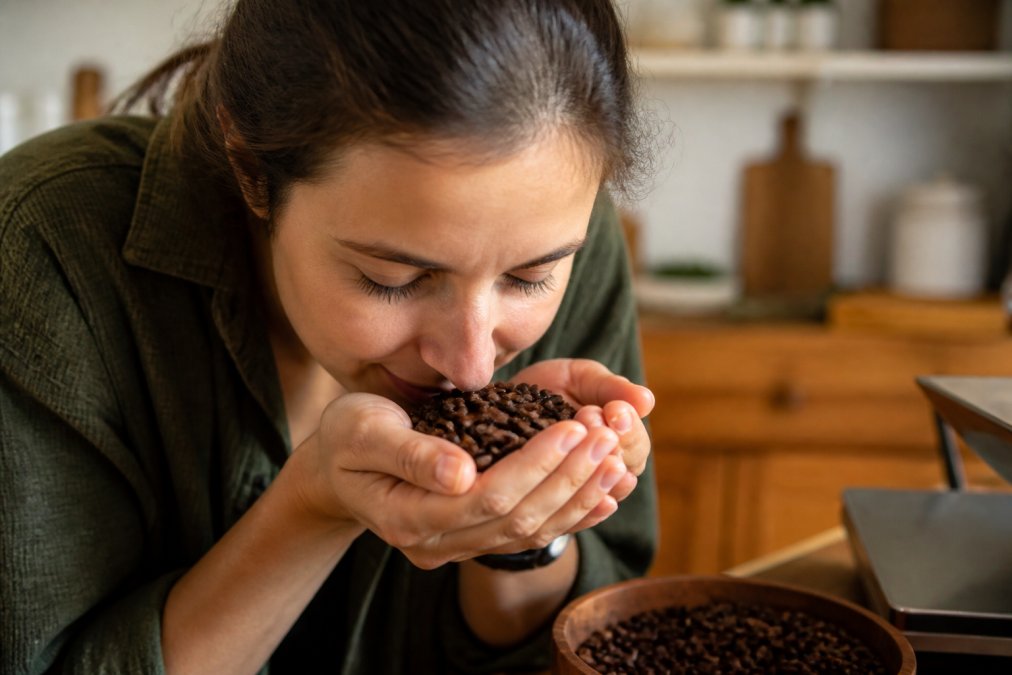
Open the bag and take a direct inhale. Fresh beans hit you immediately with rich, complex aroma, chocolate, fruit, nuts, or florals depending on origin and roast. Stale beans smell flat, musty, or papery. If you have to bury your nose in the bag to smell anything, those beans are past their prime.
Why Coffee Roast Date Importance Beats an Expiration Date
Expiration dates on coffee bags are largely meaningless. Coffee doesn't become unsafe to drink for a very long time, but flavor degrades almost immediately after roasting. Coffee roast date importance is the actual metric that matters.
According to guidance from the Specialty Coffee Association's resources on coffee freshness, coffee undergoes significant chemical changes in the days and weeks following roasting, with degassing and oxidation being the primary drivers of flavor degradation.
How to Read a Batch Date on the Bag
A batch date, or roast date, tells you exactly when the beans were roasted. Look for it near the bottom of the bag or on a sticker attached to the back. If a bag only shows a "best by" date with no roast date, treat it with skepticism.
The Peak Flavor Window for Whole Beans
Freshly roasted beans need a short rest before hitting peak flavor. Most specialty roasters recommend 5 to 10 days post-roast for espresso, and 2 to 5 days for pour-over methods.

The peak flavor window for most whole beans sits between 7 and 21 days post-roast. After 30 days, flavor degradation accelerates noticeably. After 60 days, even well-stored beans show significant loss of acidity, sweetness, and complexity.
| Stage Post-Roast | Flavor State | Recommended Use |
|---|---|---|
| 0-4 days | Off-gassing; CO2 still high | Rest, do not brew yet |
| 5-21 days | Peak flavor window | Ideal brewing period |
| 22-45 days | Gradual flavor degradation | Still acceptable, brew soon |
| 46-90 days | Noticeable staleness | Use for cold brew or espresso blends |
| 90+ days | Significant oxidation | Replace the beans |
The Coffee Bloom Test: The Most Reliable Freshness Check
The coffee bloom test is the most objective freshness check available to any home brewer. When you pour hot water over fresh grounds, carbon dioxide trapped inside the beans is released rapidly, creating a visible dome of foam. This bloom is a direct indicator of residual CO2, which signals how recently the beans were roasted.
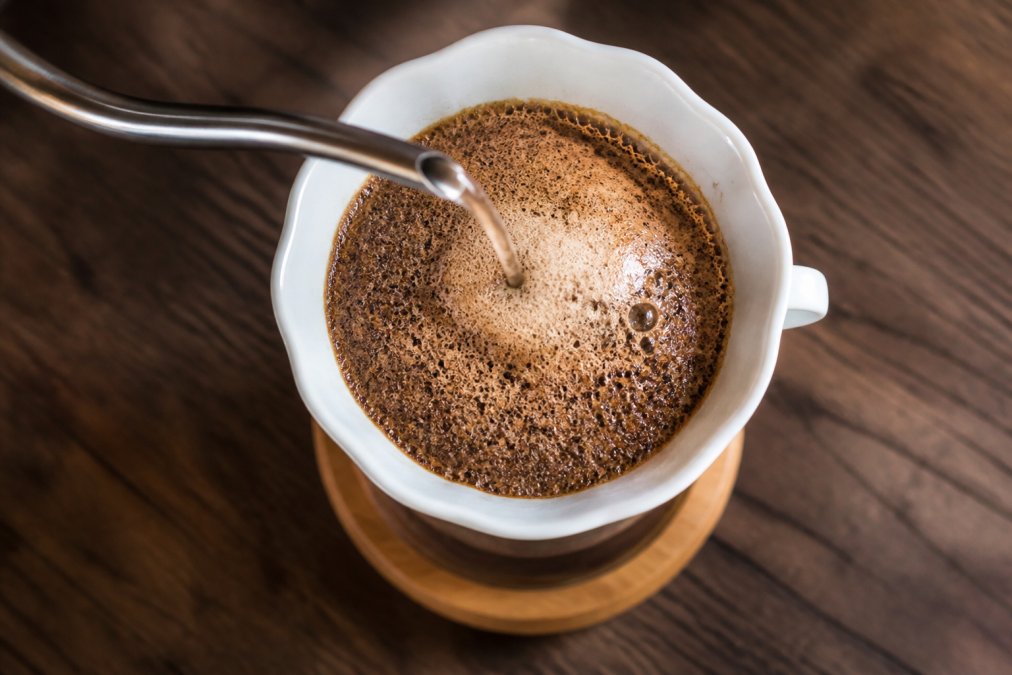
To perform the test: add grounds to your brewer, then pour just enough hot water to saturate them fully (roughly twice the weight of the grounds in water). Wait 30 to 45 seconds and watch.
Fresh beans bloom aggressively with visible swelling and active bubbling. Beans 10 to 20 days post-roast show a strong, sustained bloom. Beans older than 45 days produce a weak, flat response. Stale beans simply don't have the CO2 left to bloom.
Signs Your Beans Have Gone Stale or Rancid
Stale beans have lost volatile aromatics through oxidation. Rancid beans have undergone lipid oxidation, where oils break down into actively unpleasant compounds.
Taste Profile Indicators: Papery Taste, Hollow Body, Flat Acidity
A papery taste is the clearest sign of stale beans. You'll also notice hollow body, the coffee lacks weight and mouthfeel, and flat acidity. Rancid coffee tastes actively off: sour in an unclean way, sometimes with a musty or oily aftertaste.
Troubleshooting Stale Beans Before You Brew
Before discarding suspect beans, try these steps:
- Grind finer than usual to improve extraction contact.
- Use slightly hotter water to help pull more from the grounds.
- Brew as cold brew for better extraction over 12 to 24 hours.
- Blend with fresh beans in a 50/50 mix.
- Use stale beans for espresso, where pressure and dilution mask mild staleness.
How Packaging Technology Affects Freshness
One-way valve bags are the standard for specialty roasters. The valve allows CO2 from degassing beans to escape without letting oxygen in. Without a one-way valve, freshly roasted beans would inflate and potentially rupture a sealed bag.
Nitrogen flushing is another technology used by quality roasters: the bag is purged of oxygen and filled with nitrogen before sealing. This dramatically slows oxidation and extends the peak flavor window. As documented in research on coffee packaging and shelf life from the American Chemical Society, oxygen exposure is one of the primary accelerators of flavor degradation.
Resealable zippers and foil-lined interiors are also meaningful features. Check that the zipper creates an airtight seal and press out excess air each time you reseal.
How to Store Coffee Beans for Maximum Freshness
The four enemies of fresh coffee are oxygen, moisture, heat, and light. Every storage decision should minimize exposure to all four.
Airtight Containers vs. Original Bags
The original bag from a quality specialty roaster is often the best short-term storage option if it has a one-way valve and resealable zipper. For longer storage, transfer beans to an airtight container. Opaque ceramic or dark-tinted glass containers with rubber-sealed lids are best. Avoid clear glass: light accelerates oxidation.
Avoid refrigerating whole beans, humidity introduces moisture and beans absorb odors. Freezing is acceptable only for long-term storage in vacuum-sealed portions that are never refrozen.
Environmental Factors: Heat, Light, and Moisture
Heat accelerates flavor degradation. Store beans in a cool, stable environment away from windows and appliances. Light triggers photochemical reactions in coffee oils that produce off-flavors. A dark pantry or cabinet is always preferable to a countertop.
Keep beans away from dishwashers, sinks, and any area with fluctuating humidity to prevent moisture absorption.
Varietal-Specific Freshness: Does Bean Origin Matter?
Different coffee varietals and processing methods produce beans with different degassing rates and oxidation sensitivities. Naturally processed beans, where the coffee cherry dries around the fruit before hulling, tend to have higher residual sugar and fruit-forward flavor compounds that degrade faster than washed-process beans.
Denser beans from high-altitude growing regions, such as East African or certain South American origins, often have more tightly structured cell walls, which can slow CO2 release and extend the effective freshness window slightly. Lighter roasts also preserve more of the bean's original structure and degas more slowly than dark roasts.
As noted in the Coffee Research Institute's overview of coffee chemistry and freshness, varietal differences in bean density, processing method, and roast level all influence the rate at which flavor compounds degrade post-roast.
Understanding your specific beans, not just applying generic freshness rules, is what separates a good home brewer from a great one.
Freshness is not a marketing claim. It's a measurable, sensory reality that shows up in every cup you brew. The bloom test doesn't lie. Your nose doesn't lie. And a roast date printed clearly on the bag doesn't lie. If you want to learn more about sourcing coffee that's genuinely fresh from roast to doorstep, Mainline Roastery LLC roasts to order and ships fast, so the coffee arriving at your door is in its peak flavor window, not past it. Explore our freshly roasted blends and single-origin offerings and taste the difference a real roast date makes.
Frequently Asked Questions
Do coffee beans expire or just lose flavor?
Coffee beans do not become unsafe to drink the way perishable food does, but they degrade significantly in quality over time. Oxidation and moisture strip away the aromatic compounds that give fresh coffee beans their complexity. Whole beans stored properly in an airtight container stay at peak flavor for roughly 2 to 4 weeks after the roast date. After that, expect flat acidity, a papery taste, and hollow body, technically drinkable, but a far cry from what freshly roasted coffee delivers.
How can you tell if coffee beans have gone rancid?
Rancid coffee beans smell musty, sour, or faintly like wet cardboard rather than the rich, fragrant aroma of fresh coffee. The oily residue on dark-roasted beans can also turn rancid when exposed to air and heat for too long, producing an unpleasant, almost cheesy odor. During brewing, rancid beans produce a flat, bitter cup with no crema and very little bloom, the carbon dioxide has long since escaped. If the aroma test and bloom test both fail, the beans are past their useful life.
How long does coffee stay fresh after it's ground?
Ground coffee loses freshness far faster than whole beans because grinding dramatically increases the surface area exposed to oxygen. Pre-ground coffee begins losing peak flavor within 15 to 30 minutes of grinding at room temperature. For the best extraction and flavor profile, grind only what you plan to brew immediately. If you must store ground coffee, keep it in an airtight container away from heat and light, and use it within one to two weeks of the roast date for acceptable results.
What is the freshest coffee you can buy?
The freshest coffee comes from roasters who roast to order and ship within 24 to 48 hours of roasting. Look for bags that display a roast date, not a vague best-by date, so you know exactly when the beans were processed. Specialty roasters who roast in small batches and use one-way valve packaging to release carbon dioxide without letting oxygen in deliver the best shelf life. Grocery store coffee, by contrast, often sits in distribution for weeks before it reaches the shelf.
This article was written using GrandRanker