

Table of Contents
- How Roast Profile Changes Everything About Your Home Brew
- Single Origin vs. Blends: Which Coffee Beans Suit Home Brewing Best
- Matching Coffee Beans to Your Home Brewing Method
- Best Grind Size for Home Brewing Methods
- Coffee Brewing Ratios for Beginners
- How to Store Coffee Beans for Freshness
- Troubleshooting Bitter or Sour Coffee at Home
- Budget vs. Premium: What You Actually Get for the Price
- Frequently Asked Questions
Last Updated: August 30, 2026
Finding the best coffee beans for home brewing is harder than it looks. The grocery store shelf is full of bags with beautiful photography and zero roast dates, most roasted six months ago. At Mainline Roastery LLC, we've watched home brewers make the same mistakes: buying pre-ground, ignoring roast profiles, and wondering why their expensive equipment produces flat, bitter coffee.

This guide covers everything from roast profiles and grind size to brewing ratios and storage, so you can match the right bean to your method and taste the difference.
A quick note on freshness: according to the Specialty Coffee Association's brewing standards, coffee is best consumed within 2-4 weeks of the roast date. That single detail eliminates most of what's on grocery store shelves.
How Roast Profile Changes Everything About Your Home Brew
Roast profile is the single most important variable when selecting beans. It determines acidity, body, aroma, and how forgiving the bean will be when your brewing technique isn't perfect.
Light Roast: High Acidity, Floral and Fruity Notes
Light roast coffee is the most origin-expressive roast level. Because beans spend less time in the drum, the processing method and growing region dominate the cup. Expect bright acidity, floral or fruity tasting notes, and a lighter body. Ethiopian naturals, for example, often produce blueberry and jasmine characteristics at light roast that would be lost at darker levels.
The tradeoff: light roasts are unforgiving. They require precise water temperature (around 200-205°F), accurate grind size, and consistent technique. Pull extraction short and you get sourness; over-extract and brightness turns harsh.
Medium and Medium-Dark Roast: The Balanced Sweet Spot
Most home brewers land here for good reason. Medium roasts balance origin characteristics with caramelization from longer roast time, delivering sweetness, moderate acidity, and enough body for milk-based drinks.
Medium-dark roasts push into chocolatey, toasted, and nutty territory. The Switchyard Blend from Mainline Roastery, a medium-dark roast combining Caturra and Ethiopia Heirloom beans, exemplifies this profile. Notes of bittersweet chocolate and toasted marshmallow, with complexity from both washed and natural processing methods. It works across multiple brewing methods without demanding perfection.
Dark Roast: Bold Body, Low Acidity, Long Aftertaste
Dark roast is where the roast itself becomes the dominant flavor. Origin characteristics largely disappear, replaced by bold body, low acidity, and a long, smoky aftertaste. Dark roasts are more forgiving on technique, making them popular with French press and cold brew brewers who want consistency over nuance.
Single Origin vs. Blends: Which Coffee Beans Suit Home Brewing Best
Single origin coffee comes from one specific farm, cooperative, or region. Blends combine beans from multiple origins to achieve a consistent flavor profile.
Single origin beans reward curiosity. A washed Ethiopian Yirgacheffe tastes dramatically different from a natural Guatemalan. If you enjoy exploring flavor notes and understanding how processing method and altitude affect your cup, single origin is where that exploration happens.
Blends prioritize consistency and complexity. A well-constructed blend uses beans from different origins to cover each other's weaknesses, one might contribute body, another brightness, another sweetness. For espresso especially, blends are often the more practical choice because they produce predictable extraction across a range of grind sizes and temperatures.
For most home brewers: start with a quality blend to establish your baseline, then explore single origin beans once you understand what you're tasting.
Matching Coffee Beans to Your Home Brewing Method
The best coffee beans for home brewing depend heavily on your equipment. A bean perfect for pour over can taste flat in a French press.
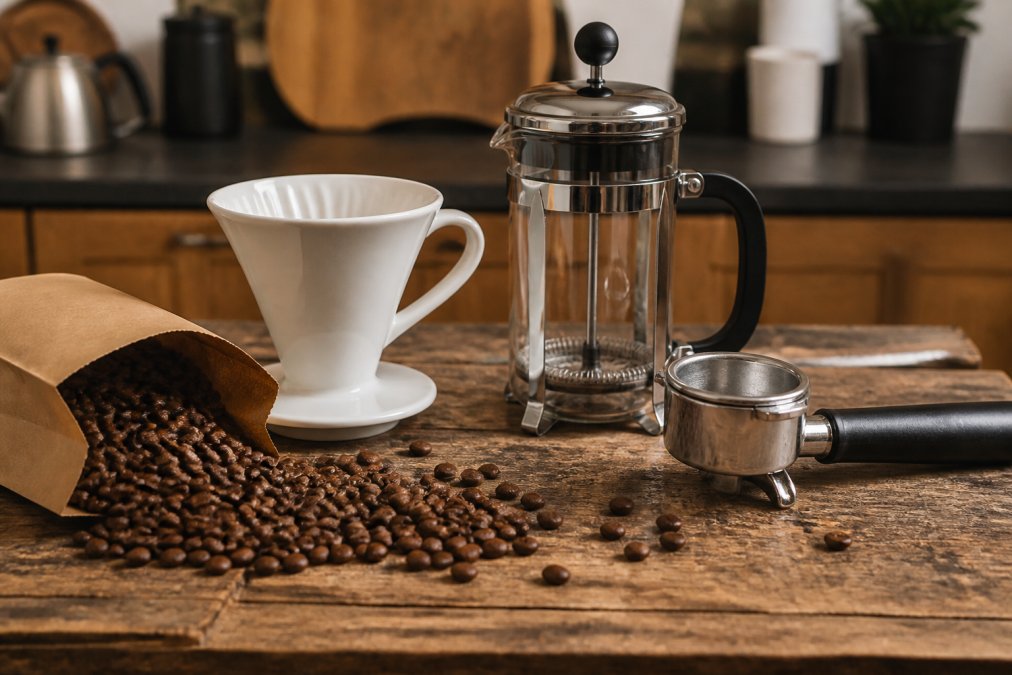
Pour Over and Drip: Where Origin Characteristics Shine
Pour over and drip brewing are the clearest window into a bean's origin characteristics. The clean extraction, especially with a paper filter, lets acidity, floral notes, and fruit-forward flavors come through distinctly.
For these methods, light to medium roasts from single origin sources perform best. A washed Ethiopian or Kenyan bean will express brightness and complexity that a dark roast cannot. Grind size matters enormously: too fine and you over-extract into bitterness, too coarse and the cup tastes sour and thin.
French Press and Cold Brew: When Body and Sweetness Matter More
French press and cold brew favor beans with more body and sweetness. The immersion brewing style combined with a metal filter that allows oils to pass through produces a heavier mouthfeel. Lighter, more acidic beans can taste thin or harsh.
Medium-dark and dark roasts with chocolatey or nutty profiles work well. For cold brew, the extended extraction time (12-24 hours) means you want beans with enough sweetness to balance the concentration. A natural process bean from Brazil or Ethiopia is a reliable starting point.
Espresso: Pressure, Extraction, and Why Roast Date Is Critical
Espresso is the most technically demanding brewing method, and roast date becomes critical. Freshly roasted beans contain CO2 from the roasting process. Too much CO2 causes channeling and uneven extraction under pressure. Most roasters recommend resting espresso beans for 7-14 days post-roast before pulling shots.
Medium-dark roasts tend to extract more predictably under pressure than light roasts. Blends are popular for espresso because they offer more consistent extraction across variables. The coffee-to-water ratio for espresso is typically 1:2 (one gram of coffee to two grams of water by weight).
Best Grind Size for Home Brewing Methods
Grind size controls extraction speed. Finer grinds expose more surface area to water, extracting faster. Coarser grinds slow extraction down.
| Brewing Method | Grind Size | Extraction Time |
|---|---|---|
| Espresso | Extra fine | 25-30 seconds |
| Pour Over | Medium-fine | 3-4 minutes |
| Drip Machine | Medium | 5-6 minutes |
| French Press | Coarse | 4 minutes steep |
| Cold Brew | Extra coarse | 12-24 hours |
A burr grinder produces consistent particle size that a blade grinder cannot match. According to the National Coffee Association's brewing guide, grind consistency is one of the primary factors in achieving balanced extraction. If your coffee tastes bitter, try a coarser grind. If it tastes sour or weak, go finer.
Coffee Brewing Ratios for Beginners
Coffee-to-water ratio is the most underused variable in home brewing. A kitchen scale costs less than a bag of specialty coffee and eliminates guesswork.
The standard starting ratio is 1:15 to 1:17 (one gram of coffee to 15-17 grams of water). Adjust by method and preference:
- Espresso: 1:2 (double shot: 18g coffee, 36g water)
- Pour Over: 1:15 to 1:16 for clarity and brightness
- French Press: 1:12 to 1:14 for heavier body
- Cold Brew concentrate: 1:5 to 1:8 (dilute before drinking)
- Drip Machine: 1:15 to 1:17 depending on roast level
Darker roasts extract more efficiently, so you can often use a slightly higher ratio without losing flavor. Light roasts may need a slightly lower ratio to compensate for slower extraction.
For pour over and drip, start with twice the weight of coffee in water (a 2:1 bloom ratio), wait 30-45 seconds for degassing, then continue pouring. Skipping the bloom produces uneven extraction.
How to Store Coffee Beans for Freshness
Proper storage extends the shelf life of freshly roasted beans and protects volatile aromatics. The enemies are heat, light, moisture, and oxygen.
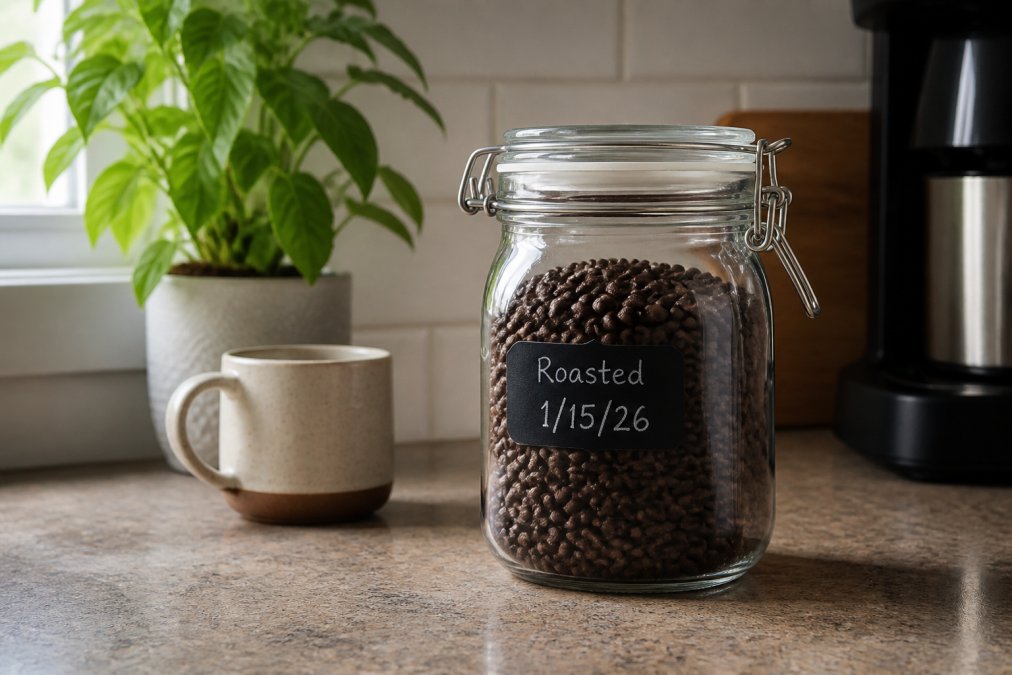
The best storage method for home brewers:
- Container: Airtight, opaque container with a one-way valve if possible. One-way valves let CO2 escape without allowing oxygen in.
- Location: Cool, dark cabinet away from the stove. Room temperature is fine; refrigerators are not.
- Quantity: Buy only what you'll use in 2-3 weeks.
- Freezing: Acceptable for long-term storage only if beans are vacuum-sealed and frozen in single-use portions. Never refreeze.
Whole bean coffee stored correctly stays fresh for 3-4 weeks post-roast. Ground coffee: 1-2 weeks at most. This is why roast date matters so much.
Troubleshooting Bitter or Sour Coffee at Home
Most bad coffee at home comes down to one of two problems: over-extraction (bitter) or under-extraction (sour).
Bitter coffee tastes harsh and unpleasant. Common causes: grind too fine, water too hot (above 205°F), brew time too long, too much coffee relative to water, or stale dark roast beans.
Sour coffee tastes sharp and thin. Common causes: grind too coarse, water too cool (below 195°F), brew time too short, too little coffee relative to water, or light roast beans extracted too quickly.
The fix is almost always one adjustment at a time. Change the grind size first, it has the biggest impact. If bitterness persists after going coarser, lower the water temperature by 5°F. If sourness persists after going finer, extend the brew time slightly.
If you've adjusted everything and the coffee still tastes flat or papery, the beans are likely stale. No technique fixes oxidized coffee. This is where sourcing from a roaster with a clear roast date becomes non-negotiable.
Budget vs. Premium: What You Actually Get for the Price
Budget coffee and specialty coffee serve different purposes. Here's what the price difference actually buys:
| Feature | Budget Coffee | Specialty Coffee |
|---|---|---|
| Roast date transparency | Rarely listed | Standard practice |
| Bean grade | Commodity (below 80 SCA score) | Specialty (80+ SCA score) |
| Processing method | Typically washed, blended | Washed, natural, or honey |
| Flavor complexity | Flat, one-dimensional | Layered tasting notes |
| Freshness at purchase | Often 6+ months old | 1-4 weeks post-roast |
| Grind form | Usually pre-ground | Whole bean standard |
According to the Specialty Coffee Association's grading standards, specialty-grade coffee must score 80 points or above on a 100-point scale and contain zero primary defects. That's a measurable standard, not a marketing label.
You're not just paying for a label. You're paying for traceability, freshness, and flavor complexity that commodity coffee cannot produce. The Switchyard Blend from Mainline Roastery at $17.99 is a direct example: medium-dark, freshly roasted, with documented origin across East Africa and South America. That's a different product category than an unlabeled grocery store bag.
The hardest part of home brewing isn't the technique, it's starting with the right beans. Stale coffee, wrong roast profile, and mismatched grind size will undermine even the best equipment. Mainline Roastery sources and roasts specialty-grade whole bean coffee with a clear roast date, so you know exactly what you're getting. The Switchyard Blend ships fresh and works across pour over, French press, and espresso without demanding perfection from the brewer. Get started with Mainline Roastery and taste what freshly roasted coffee is actually supposed to taste like.
Frequently Asked Questions
How do I choose the best coffee beans for my brewing method?
Match roast level and grind size to your equipment. Pour over and drip brewers bring out floral and fruity notes in lighter roasts, so a washed single-origin works well. French press and cold brew reward medium to dark roasts with heavier body and sweetness. Espresso needs a medium-dark roast with enough oil and density to survive high-pressure extraction. Always buy whole bean coffee and grind fresh, pre-ground loses aroma and flavor within days of opening.
What is the difference between single-origin and coffee blends?
Single-origin beans come from one farm, region, or cooperative, which means the flavor notes reflect that specific terroir, think fruity Ethiopian naturals or bright Colombian washed coffees. Blends combine beans from multiple origins to hit a consistent flavor target year-round. For home brewing, single origins are great for pour over or drip where nuance shows. Blends, like the Switchyard Blend from Mainline Roastery, are designed to stay balanced across different brewing methods and hold up well in espresso or French press.
How does roast level affect the flavor of home-brewed coffee?
Roast level determines acidity, body, sweetness, and bitterness. Light roasts preserve the bean's natural fruit and floral characteristics, with higher acidity and lighter body. Medium roasts balance brightness with chocolate and caramel sweetness. Dark roasts reduce acidity significantly, producing bold bitterness, a heavy mouthfeel, and a long aftertaste. The roast also affects caffeine content slightly, contrary to popular belief, lighter roasts retain marginally more caffeine by volume.
How fast does whole bean coffee go stale, and does the roast date matter?
Whole bean coffee is at peak flavor within two to four weeks of the roast date. After that, oxidation steadily degrades aroma and taste. The roast date matters more than the 'best by' date, a bag with a best-by date six months out but no roast date is almost certainly not fresh. Buy from roasters who print the roast date, store beans in an airtight container away from heat and light, and aim to finish a bag within three weeks of opening it.
This article was written using GrandRanker