

Table of Contents
- What Makes Coffee Specialty Grade?
- 1. Check the SCA Specialty Coffee Score
- 2. Read the Roast Date, Not the Best-By Date
- 3. Inspect the Beans for Defects
- 4. Learn How to Read Coffee Labels for Quality
- 5. Look for Origin Transparency and Traceability
- 6. Evaluate Flavor Profile and Cupping Notes
- 7. Test Freshness at Home
- Frequently Asked Questions
Last Updated: October 4, 2026
What Makes Coffee Specialty Grade?
Specialty grade coffee is coffee that scores 80 points or higher on the Specialty Coffee Association (SCA) 100-point scale, with zero primary defects in the green beans. That score is the dividing line between everyday commodity coffee and coffee worth paying more for.
At Mainline Roastery LLC, we roast to order and ship the same day, because a high cupping score means nothing once the beans go stale. Freshness protects quality.
Most grocery store bags hide their score, their harvest date, and often their roast date. That is not an accident.
Below, we break down 7 ways to identify specialty grade coffee beans so you can judge a bag before you buy it.
1. Check the SCA Specialty Coffee Score
The SCA specialty coffee score is the industry's official quality grade, measured by licensed Q Graders during a formal cupping. Coffee scoring 80 to 84.99 is "very good." Coffee scoring 85 to 89.99 is "excellent." Anything above 90 is "outstanding."
Only certified Q Graders can issue an official score. That certification is run through the Coffee Quality Institute's Q Grader program, which trains graders to detect defects and score consistently across tasters.
What the 80-Point Threshold Actually Means
An 80-point coffee has no primary defects (faults like mold or phenol) and only minor secondary defects. A 79-point coffee is still "fine," but it is graded as commodity, not specialty.
Here is the practical part: most roasters who score above 80 print it on the bag. If a bag says nothing about a score, ask. A roaster with nothing to hide will tell you.
2. Read the Roast Date, Not the Best-By Date
The roast date tells you when the coffee was actually roasted. A "best by" date tells you almost nothing, because it is usually set 9 to 12 months after roasting to protect the retailer, not your cup.
Specialty roasters print the roast date. Commodity brands print "best by."
Coffee tastes best roughly 4 to 21 days after roasting for most brew methods. After that, the oils oxidize and the aroma flattens. Beans ground weeks ago lose the fight before you even open the bag.
If you want a fast check: flip the bag over. If you cannot find a roast date, put it back.
3. Inspect the Beans for Defects
Whole beans let you see what a cupping table would catch. Spread a small handful on a white plate in good light and look for anything that does not belong.
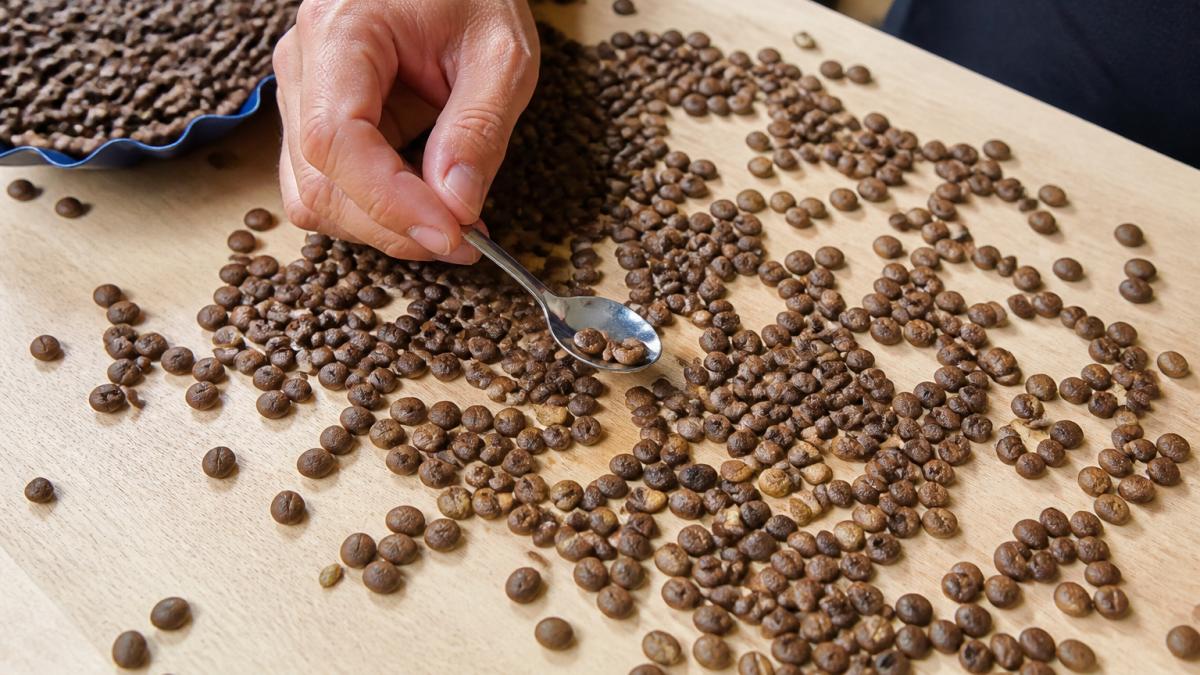
Defects You Can Spot at Home
- Immature beans: pale, thin, and grassy-smelling
- Sour beans: wrinkled and dull, often from poor processing
- Moldy beans: white or greenish fuzz, or a musty smell
- Shattered beans: broken or chipped pieces, a sign of rough handling
- Black or dark beans: charred or fermented past the point of use
A few defects in a bag are normal. A bag that is 10% chaff and broken pieces is a red flag.
4. Learn How to Read Coffee Labels for Quality
Most bags are designed to look premium without telling you anything verifiable. Learning how to read coffee labels for quality means separating the four facts that predict cup quality from the marketing words that predict nothing.
Here is what actually matters on a bag:
| Label Item | What It Tells You | Why It Matters |
|---|---|---|
| Roast date | When it was roasted | Freshness window |
| Origin | Country, region, or farm | Traceability |
| Processing method | Washed, natural, honey, anaerobic, etc. | Flavor direction |
| Varietal | Bean type (Bourbon, Typica, Gesha, etc.) | Cup potential |
| Altitude | Growing elevation in meters or feet | Density and sweetness |
| Score | SCA grade | Objective quality |
Decoding the Four Facts That Matter
Altitude. Coffee grown above roughly 1,200 meters (about 4,000 feet) tends to be denser, because cooler air slows cherry maturation and concentrates sugars. Dense beans roast more evenly and usually cup sweeter and more acidic.
Processing method. This is the single biggest flavor lever after origin. Washed coffees are fermented and rinsed before drying, which produces a clean, bright, transparent cup. Natural coffees are dried inside the fruit, which pushes heavy fruit and fermented sweetness. Honey processing leaves some mucilage on the seed, landing between the two.
Varietal. Bourbon and Typica are the classic heirloom varieties: balanced, sweet, and reliable. Gesha (also spelled Geisha) is the famous high-scoring variety known for jasmine and bergamot. Pacamara produces large beans with a creamy body. Caturra and Catuai are common high-yield varieties that can still cup well at high altitude.
Switchyard Blend Medium-Dark Roast Coffee 12 oz →
Origin specificity. 'Ethiopia' is a country. 'Yirgacheffe' is a region. 'Kochere, Yirgacheffe' is a washing station or woreda. 'Kochere, Yirgacheffe, Lot 14, 2025 harvest' is traceable. The more specific the label, the more the roaster has to lose if the coffee underperforms.
Marketing Words That Mean Nothing
- 'Gourmet', no legal definition, no score, no standard.
- 'Premium', same problem. Anyone can print it.
- 'Artisan', describes the roaster's self-image, not the bean.
- 'Small batch', a batch size, not a quality grade.
- 'Fresh roasted', meaningless without a date. Every roaster claims it.
5. Look for Origin Transparency and Traceability
Origin transparency means the roaster names the farm, cooperative, or washing station, not just the country. Traceability means you can follow the beans from harvest to your cup.
A bag that says "Ethiopia" is vague. A bag that names the region, the washing station, and the harvest year is traceable.
This matters for two reasons. First, traceable coffee usually scores higher, because someone cared enough to track it. Second, it lets you verify the sourcing claim. If a roaster says "single-origin," the label should name one specific place, not a blend of regions.
Ask where the beans came from. A real answer takes ten seconds.
6. Evaluate Flavor Profile and Cupping Notes
Cupping notes describe what trained tasters detect in the cup, using a shared vocabulary: acidity, body, sweetness, balance, aroma, and aftertaste. These are sensory assessment terms, not marketing. The problem is that most guides list the vocabulary and stop, they never teach you how to taste for it.
Here is what the terms mean in practice, and how to train your palate to find them:
- Acidity: brightness, like citrus or berry, not sourness. It shows up as a tingling sensation on the sides of your tongue and a quick, clean finish.
- Body: the weight on your tongue, from tea-like to syrupy. Whole milk versus skim milk is the classic comparison.
- Sweetness: natural sugar notes, like caramel or fruit. It appears mid-palate and lingers.
- Balance: no single note overpowers the others. If acidity screams and sweetness whispers, the cup is not balanced.
- Aftertaste: how long the flavor lingers after you swallow. A long, pleasant finish is a hallmark of high-scoring coffee.
A Home Cupping Setup That Actually Works
You do not need a Q Grader's table to taste like one. A simple home cupping takes about fifteen minutes and four pieces of equipment: a kettle, a scale, a spoon, and two identical mugs.
- Weigh 8.25 grams of whole beans per 5 ounces of water. That is the SCA cupping ratio, scaled down. Grind coarse, like sea salt.
- Smell the dry grounds first. This is the 'dry fragrance.' Note the first three things that come to mind, do not overthink it.
- Pour water just off boil (about 200°F) over the grounds and start a timer. At four minutes, break the crust with a spoon and smell again. This is the 'wet aroma,' and it is usually more intense than the dry.
- Skim the foam and let it cool to about 160°F before sipping. Slurp from the spoon, this aerates the coffee across your palate and makes acidity and sweetness easier to detect.
- Taste at hot, warm, and room temperature. Flavors shift as coffee cools. A cup that tastes flat hot but sweet at 120°F is telling you something about the roast, not the bean.
Defects vs. Notes: How to Tell the Difference
Beginners often confuse a defect with an unusual note. The distinction is simple: a defect is a flaw that makes the cup less pleasant, while a note is a characteristic that makes it more interesting.
- Defect signals: ash, rubber, cardboard, medicinal, phenol, mold, or a harsh, drying finish.
- Note signals: specific fruit, floral, spice, chocolate, or nut references that you can name and that fade pleasantly.
A common pattern is that heavy roasting masks defects in low-grade beans. If every coffee from a brand tastes dark and smoky, that is often the reason, not a style choice.
7. Test Freshness at Home
Freshness is the easiest thing to test and the one most people skip. You can check it in about a minute.
Try these three checks:
- The smell test. Open the bag and breathe in. Fresh beans smell sweet and complex. Stale beans smell like cardboard or nothing at all.
- The bloom test. Pour hot water over a spoonful of grounds. Fresh coffee puffs up and releases gas. Stale coffee barely reacts.
- The squeeze test. Press a whole bean between your fingers. Fresh beans are hard and snap. Old beans crumble or feel spongy.
If a bag fails all three, the roast date is probably older than you thought, or the beans sat in a warehouse.
This is why we roast to order. Our Switchyard Blend leaves the roastery the same day it is roasted, not weeks later. It is a medium-dark roast with notes of bittersweet chocolate, toasted marshmallow, candied orange, and praline, built for people who want a bold cup that holds up through a long shift.

Judging coffee quality takes practice, but the signals are not hidden. Scores, roast dates, defect checks, and label reading will tell you more than any "gourmet" sticker ever will.
At Mainline Roastery LLC, we roast fresh, ship fast, and print what is in the bag. Our specialty blends and single-origin beans are roasted to order, so what lands on your counter still tastes like the day it was roasted. Whether you brew at home or stock a break room, get started with Mainline Roastery and taste the difference fresh roasting makes.
Frequently Asked Questions
What are the different grades of specialty coffee?
The Specialty Coffee Association uses a 100-point scale. Coffee scoring 80 or above is classified as specialty grade, while 90+ earns the label of outstanding. Below 80 falls into commodity or premium categories. The score reflects defects, flavor, acidity, body, balance, and sweetness evaluated by licensed Q Graders during a standardized cupping session.
Does roast date affect specialty coffee quality?
Yes, significantly. Unlike best-by dates, roast dates tell you when the beans were actually roasted. Most specialty roasters recommend brewing within 2 to 6 weeks of the roast date for peak flavor. Beans older than 8 weeks lose aroma and complexity. Mainline Roastery roasts to order and ships the same day, so the roast date on your bag is typically within days of arrival.
What is the difference between gourmet and specialty coffee?
Gourmet is a marketing term with no formal definition. Specialty coffee must meet SCA standards, score 80+ points, and come from traceable origins. A gourmet label might appear on grocery store beans with no roast date or origin information. Specialty beans always disclose origin, processing method, and harvest details.
How can I tell if coffee beans are high quality at home?
Start by checking the roast date and looking for origin details on the bag. Inspect the beans for defects like chips, cracks, or uneven color. Smell the beans before brewing; fresh specialty beans have a pronounced aroma. Brew a small cup and taste for sweetness, acidity, and a clean finish. If the flavor goes flat quickly, the beans may be stale or low grade.