

Table of Contents
- Why Fast Coffee Delivery and Consistent Roast Quality Go Together
- What Does Roasted to Order Mean for Your Cup?
- How to Tell If Coffee Beans Are Fresh Before You Brew
- How Long Do Coffee Beans Stay Fresh After Delivery?
- How to Store Coffee Beans So Roast Quality Lasts
- Balancing Fast Shipping With the Post-Roast Rest Period
- Evaluating Roast Consistency and Delivery Claims
- Frequently Asked Questions
Last Updated: October 6, 2026
Why Fast Coffee Delivery and Consistent Roast Quality Go Together
The best coffee delivered fast for consistent roast quality is coffee that reaches your door days after roasting, not weeks after.
Freshness fades on a clock. Coffee starts losing peak aroma within days of roasting, and the drop accelerates once the bag is open.
Here's the part most buyers miss: fast delivery isn't a perk, it's a quality control step.
What Does Roasted to Order Mean for Your Cup?
Roasted to order means your beans are roasted after you place the order, not pulled from stock roasted weeks earlier. The bag you receive was green coffee when you clicked buy.
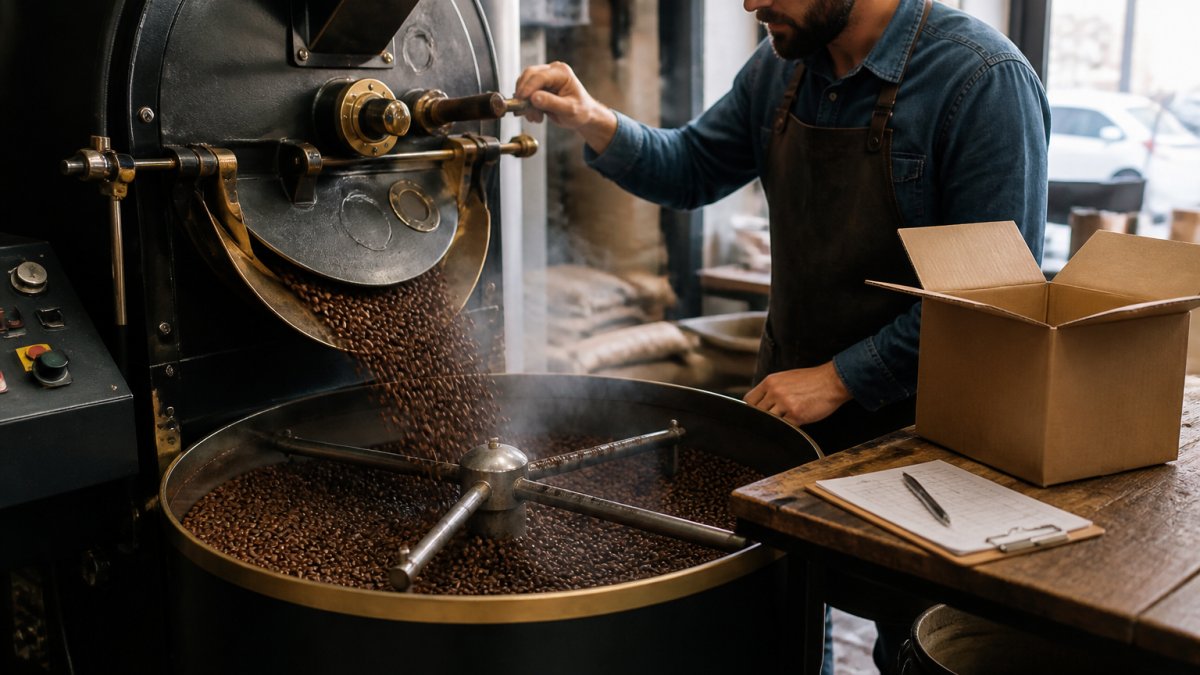
That single change affects everything downstream. Coffee has no meaningful shelf life sitting green; it stays stable for months. Once roasted, the clock starts.
In practice, this is why small-batch roasting and made-to-order roasting show up together. Smaller batches mean less inventory sitting around.
How to Tell If Coffee Beans Are Fresh Before You Brew
Knowing how to tell if coffee beans are fresh comes down to three checks: the roast date, the smell, and the surface.
- Roast date, not best-by date. A best-by date tells you nothing about when the beans were roasted. Look for the actual roast date printed on the bag.
- Smell test on opening. Fresh beans release a strong, sweet aroma. Stale beans smell flat, papery, or faintly like cardboard.
- Surface oils. A medium-dark roast shows a slight sheen when fresh. Beans that look dull and dry, or overly oily and slick, are usually past their window.
- Sound at the grinder. Fresh beans crackle softly as they grind. Quiet grinding is a warning sign.
Whole beans hold their quality far longer than ground coffee because the surface area exposed to air is far smaller. If you want maximum flavor and aroma, buy whole beans and grind just before brewing.
How Long Do Coffee Beans Stay Fresh After Delivery?
**How long do coffee beans stay fresh?
The exact timeline depends on the roast profile and how the beans are stored.
Specialty Coffee Association guidance on coffee freshness and storage notes that oxygen, moisture, heat, and light are the four main enemies of roasted coffee. Control those four and you stretch the window considerably.
For espresso, freshness interacts with grind size and extraction. Beans that are too fresh can gush and taste harsh; beans that are too old pull thin and bitter.
How to Store Coffee Beans So Roast Quality Lasts
Storing coffee beans well is simple once you know the four enemies: air, moisture, heat, and light. Beat all four and roast quality lasts noticeably longer. But the details matter more than the slogan, because the way a bag is packaged and the way you open it determine how much of the roast window you actually get to drink.
Read the packaging before you read the storage advice. The bag a roaster ships in is the first storage decision, and it's already made by the time the coffee reaches you:
- One-way degassing valve. A small silicone or foil valve lets carbon dioxide escape without letting oxygen in. Without it, a sealed bag either balloons or the roaster has to pack beans after they've already degassed for days, which means older coffee by the time it ships.
- Multi-layer foil or metallized liner. Blocks light and slows oxygen transmission far better than a single-layer kraft or paper bag. If you can see the beans through the bag, light is reaching them.
- Resealable zip or tin tie. Determines whether you can keep using the original packaging or need to transfer. A bag with a valve but no reseal forces a transfer on day one.
- Nitrogen flush (when disclosed). Some roasters displace oxygen with nitrogen before sealing. It's a real shelf-life extender, but it does not replace a roast date, it only slows the clock, it doesn't stop it.
Once the bag is open, the storage rules are about slowing oxidation and moisture swings:
- Keep beans in the original bag if it has a one-way valve. That valve lets carbon dioxide escape without letting oxygen in, and the bag was designed for the bean.
- Transfer to an opaque, airtight container if the bag has no valve or won't reseal. A ceramic or stainless canister with a gasket beats a clear glass jar on a sunny counter.
- Store at room temperature, away from the stove and windows. Heat accelerates the staling reactions; a cabinet above the oven is one of the worst spots in the kitchen.
- Skip the freezer for daily-use beans. Every time you open the container, moisture condenses on the cold beans. If you must freeze, portion into single-use vacuum bags and thaw once, fully, before grinding.
- Buy smaller amounts more often. A 12 oz bag you finish in two weeks beats a bulk order you open for a month.
Troubleshooting inconsistent cups after storage. If a bag that tasted great on day four tastes flat or harsh by day twelve, the roast probably isn't the problem, the storage is. Work through this order before blaming the roaster:
- Grind first. A grinder that's drifted coarser or finer will change extraction more than a week of staling will.
- Check dose and water. A scale that's off by a gram, or a kettle that's running hotter than usual, mimics the symptoms of stale coffee.
- Then check the bag. If the beans smell papery or the surface looks uniformly dull, the storage window has closed. If they still smell sweet and the cup is off, the issue is in the brew, not the bean.
U.S. Department of Agriculture information on coffee storage and handling covers the broader handling principles behind keeping roasted goods in good condition.
Balancing Fast Shipping With the Post-Roast Rest Period
There's a tension most guides ignore: coffee needs a short rest after roasting, but it also needs to reach you quickly.
Switchyard Blend Medium-Dark Roast Coffee 12 oz →
Right after roasting, beans release carbon dioxide in a process called degassing. Brew too soon and the gas interferes with extraction, producing uneven, sometimes sour cups.
Here's the practical rule we'd give a friend:
| Time After Roast | What's Happening | Best Use |
|---|---|---|
| Day 0-2 | Heavy degassing | Let it rest |
| Day 3-7 | Flavor opens up | Filter and pour-over |
| Day 7-14 | Peak balance | Espresso and drip |
| Day 14-28 | Gradual decline | Still good, drink up |
| Past 28 days | Noticeable fade | Finish or replace |
This is why fast shipping and a rest period aren't opposites. Fast shipping gets the coffee to you during its rest window, so by the time it lands, it's ready to brew.
A roaster that roasts to order and ships the same day hands you that window intact. U.S. Department of Agriculture information on coffee storage and handling covers the broader handling principles behind keeping roasted goods in good condition.
Evaluating Roast Consistency and Delivery Claims
Roast consistency is the hardest quality claim to verify, and the one most worth checking. Anyone can print "fresh" on a bag.
A measurable freshness and delivery checklist. Before you order, pull these numbers off the product page or the roaster's FAQ. If a roaster won't publish them, that's the answer:
- Roast date disclosure. Is the roast date printed on the bag, or only a best-by date? A best-by date tells you nothing about when the beans were roasted.
- Roast days per week. A shop that roasts two or three fixed days a week ships on a predictable schedule. A shop that roasts daily ships faster but may have less batch-to-batch control.
- Dispatch window. "Ships within 24 hours" is specific. "Fast shipping" is not. Look for an actual number.
- Transit estimate to your ZIP code. Ground transit from a roaster two states away is often two to three days; from across the country, four to five. Add the dispatch window to the transit estimate to get total days from roast to door.
- Packaging spec. One-way valve, foil liner, resealable top. These are the mechanics that protect quality in transit.
- Sample or return policy. A roaster confident in batch consistency will let you try a small bag or replace a bag that arrived stale.
Run the math once and the marketing falls away.
How to verify batch-to-batch consistency. This is the part almost no guide tells you to do, and it's the only test that actually answers the question:
- Order the same bean twice, three to four weeks apart. Note the roast date on each bag.
- Brew both with the same dose, grind, water, and method. Change one variable at a time if you have to, but keep the recipe identical between bags.
- Taste side by side if you can. If the second bag tastes noticeably different, flatter, sharper, or thinner, the roast profile isn't holding steady across batches.
- Log what you find. A simple note on roast date, arrival date, and cup impression is enough. After three or four orders you'll know whether the roaster's consistency claim is real.
A roaster that passes this test is doing the unglamorous work: green coffee lotting, roast profiling, and cupping every batch before it ships.
A few more things to weigh when comparing sellers objectively:
- Sourcing transparency. Origin, farm, and processing method are checkable facts. "Premium beans" is not.
- Shipping window. Specific numbers beat adjectives every time.
- Customer reviews. Look for comments about arrival freshness and taste consistency across repeat orders, not just speed.
- Price. Specialty coffee costs more than grocery-aisle beans because of sourcing and small-batch roasting. Affordable doesn't have to mean stale, but the cheapest bag usually got that way by sitting.
Our own Switchyard Blend is roasted to order and shipped the same day, so every bag leaves the roastery fresh rather than sitting in a warehouse.

U.S. Food and Drug Administration guidance on food labeling and date terminology is worth a read if you want to understand why "best by" and "roast date" mean such different things.
Frequently Asked Questions
Does faster coffee delivery mean fresher beans?
Not automatically. Speed only helps if the roaster also roasts to order and prints a roast date on the bag. A two-day shipping window means nothing if the beans sat in a warehouse for six weeks first. Check the roast date, the roast-to-order claim, and the shipping window together. Mainline Roastery roasts the Switchyard Blend to order and ships the same day, so the clock starts when the beans are roasted, not when they leave a storage facility.
How can I tell if coffee beans are fresh without opening the bag?
Look for a printed roast date, not just a best-by date. Squeeze the bag gently: freshly roasted beans release carbon dioxide, so a one-way degassing valve and a slightly puffed bag are good signs. Whole beans should look evenly colored with a matte, not oily, surface on a medium-dark roast. If the bag has no roast date at all, you have no way to verify freshness, which is the single biggest red flag when buying coffee online.
How should I store coffee beans to keep roast quality consistent?
Keep whole beans in an opaque, airtight container at room temperature, away from light, heat, and moisture. Do not store them in the fridge, where condensation and odors transfer into the beans. Buy a 12 oz bag like the Switchyard Blend that you will finish within two to three weeks rather than a bulk bag that goes stale. Grind right before brewing to protect aroma and flavor.
How long after roasting should I use coffee beans?
Peak flavor for most roasts lands between four and fourteen days after the roast date. Espresso often needs three to seven days of rest to settle, while pour-over and drip can taste great sooner. After about three to four weeks, flavors flatten noticeably. That is why roast-to-order shipping matters: it puts the bag in your hands during the window when the coffee is actually at its best, not after it.
The challenge is simple: most coffee is stale before it reaches your kitchen, and no brewing skill fixes that. Mainline Roastery roasts to order, ships the same day, and offers blends and single-origins built for bold flavor. Get started with Mainline Roastery and taste what coffee delivered fast for consistent roast quality actually means.