

Table of Contents
- Why Single Origin Beans Taste Different in Your Kitchen
- Single Origin vs Blend Coffee: What Changes in the Cup
- How to Choose Single Origin Coffee by Origin, Roast, and Process
- The Best Coffee Beans for Pour Over Brewing
- Water Chemistry and Grind Size: The Two Variables Most Brewers Skip
- Storage and Shelf Life: Keeping Single Origin Beans Fresh
- Budget-Friendly vs Premium Single Origin Beans
- Frequently Asked Questions
Last Updated: September 11, 2026
Why Single Origin Beans Taste Different in Your Kitchen
A bag of single origin beans is not just coffee from one place. It is coffee from one harvest, one farm or cooperative, and one processing method, which is why the best single origin beans for home brewing can taste radically different from the blends sitting on grocery shelves. At Mainline Roastery LLC, we roast in small batches so those differences survive the trip to your kitchen instead of getting flattened out.
Blends are engineered for consistency. Single origins are engineered for character, and character is fragile. It fades with time, heat, oxygen, and stale water.
Here is the part most guides skip: the same bean can taste like two completely different coffees depending on how you brew it. Below, we break down what actually changes in the cup, how to pick beans by origin and roast, and the two variables most home brewers ignore.
Single Origin vs Blend Coffee: What Changes in the Cup
Single origin vs blend coffee comes down to one trade-off: predictability versus distinctiveness. A blend combines beans from multiple regions to hit a consistent flavor target year-round. A single origin showcases one region's terroir, which means it changes harvest to harvest and rewards attention to brewing detail.
That variability is the point. A washed Ethiopian and a natural Brazilian share almost nothing in the cup, and that range is exactly what makes single origins worth brewing at home.
- Blends prioritize balance and repeatability. Great for daily drip and milk drinks.
- Single origins prioritize flavor clarity and complexity. Great for pour over, AeroPress, and any method where you want to taste the origin.
- Micro-lots and single-estate coffees sit at the top of the single-origin tier, separated by lot rather than region.
If you drink coffee with milk or sugar, a blend often serves you better. If you drink it black and want to taste citrus, floral notes, or chocolatey depth, single origins are the move.
Specialty Coffee Association's brewing standards
How to Choose Single Origin Coffee by Origin, Roast, and Process
How to choose single origin coffee starts with matching three variables to your taste: origin, roast level, and processing method. Get those right and you are most of the way to a great cup before you ever grind a bean.
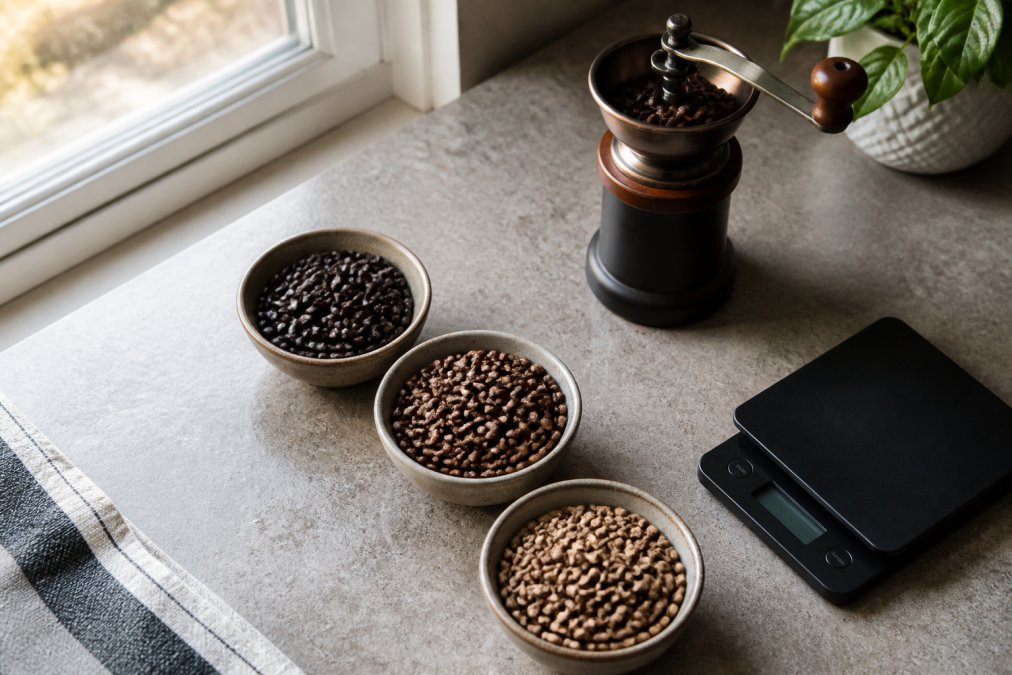
Match the Origin to the Flavor You Want
Every growing region leaves a signature. Higher altitude tends to produce denser beans with more acidity and complexity; lower altitude tends toward softer, sweeter cups.
- East Africa (Ethiopia, Kenya): floral, citrus, tea-like. High acidity, light body.
- Central America (Guatemala, Costa Rica): balanced sweetness, stone fruit, mild chocolate.
- South America (Brazil, Colombia): nutty, chocolatey, heavier body, lower acidity.
- Indonesia (Sumatra): earthy, herbal, syrupy body.
Read the Roast Date, Not the Best-By Date
The roast date is the only freshness marker that matters. A best-by date tells you nothing about when the beans were actually roasted. Look for whole bean coffee with a printed roast date, ideally within two to three weeks of purchase. Beans need a few days to degas after roasting, then hit their peak roughly four to fourteen days out.
The Best Coffee Beans for Pour Over Brewing
The best coffee beans for pour over are light to medium roasts from high-altitude, washed-process origins. Those beans have the acidity and flavor clarity that pour over is built to highlight, and they hold up to the slower extraction a pour over demands.
Medium roasts from Central America are the safest starting point. Light-roast East African coffees reward a bit more precision. Dark roasts tend to taste flat and ashy in a pour over because the roast character overwhelms the origin.
| Roast Level | Best Origin Match | Flavor Result | Difficulty |
|---|---|---|---|
| Light | East Africa | Floral, citrus, tea-like | Higher |
| Medium | Central America | Balanced, stone fruit, chocolate | Moderate |
| Medium-Dark | South America | Nutty, chocolatey, full body | Easy |
| Dark | Indonesia | Earthy, syrupy, low acidity | Easy |
A common mistake is buying dark-roasted beans for pour over because they look "richer." In practice, dark roasts mute the very terroir you paid a premium for.
Water Chemistry and Grind Size: The Two Variables Most Brewers Skip
Water chemistry is the single most overlooked variable in home brewing, and it is also the one most guides wave away with "use filtered water." Coffee is roughly 98% water by mass, so the minerals dissolved in that water do more to shape the cup than most gear upgrades. The Specialty Coffee Association's water quality handbook is the common reference point here, and the practical takeaway is that you want water with some mineral content, not distilled or reverse-osmosis water stripped of everything.
The two minerals that matter most are magnesium and calcium, which bind to coffee compounds and pull them into solution, and bicarbonate, which buffers acidity. A common target range practitioners use is roughly 50-150 ppm total hardness as calcium carbonate, with alkalinity held below about 40 ppm (sca.coffee). If your tap water is very hard or very soft, you will taste it: hard, high-bicarbonate water flattens bright East African coffees into a chalky, muted cup, while near-zero-mineral water produces a thin, hollow brew no matter how good the bean is.
A practical home fix is a simple mineral packet or a third-wave water recipe: start with distilled or reverse-osmosis water and add a measured blend of magnesium sulfate (Epsom salt) and baking soda. Most home brewers find that even a modest adjustment, bringing tap water from very hard down to the middle of the range, does more for a delicate washed Ethiopian than any grinder upgrade.
Grind size calibration matters just as much, and it changes by origin because bean density changes by origin. Higher-altitude beans grown slowly in cool air are denser and more resistant to extraction, so they often need a slightly coarser grind than you would expect for their roast level. Softer, lower-altitude beans extract faster and often want a finer grind to reach the same strength. Start with a medium grind for pour over, then adjust one notch at a time based on taste.
- Too sour or thin? Grind finer, you are under-extracting.
- Too bitter or dry? Grind coarser, you are over-extracting.
- Weak but not sour? Increase your brew ratio, not your grind.
- High-altitude washed East African tasting muddy? Go one step coarser before you blame the bean.
- Low-altitude natural Brazilian tasting flat? Go one step finer to pull more sweetness.
U.S. Geological Survey on water quality basics
Storage and Shelf Life: Keeping Single Origin Beans Fresh
Whole bean coffee stales fastest when exposed to oxygen, heat, light, and moisture, so storage is a freshness problem, not a shelf-life problem. The goal is to slow oxidation without introducing moisture.
Store beans in an opaque, airtight container at room temperature, away from the stove and the windowsill. Skip the freezer for daily-use beans, since repeated thawing pulls moisture into the beans and dulls flavor. If you buy in bulk, freeze a portion in a sealed bag and leave it there until you are ready to use it.
Buy in quantities you will finish within a few weeks. A pound of whole bean coffee is roughly two to three weeks of daily brewing for most households, and that window lines up well with the peak flavor period. Grinding right before you brew preserves far more flavor than any storage trick.
Budget-Friendly vs Premium Single Origin Beans
The gap between budget-friendly and premium single origin beans is mostly about traceability and lot size, not magic. But the more useful question for a home brewer is not "is premium worth it", it is "what does each tier actually buy me per ounce, and where does my money stop working?" Most guides skip that math. Here is a framework.
Think in three rough tiers, priced per ounce of whole bean:
- Everyday tier (roughly the low end of the specialty range): larger cooperatives, blended-lot single origins from Brazil, Colombia, or Sumatra. These are consistent, forgiving, and excellent for daily drip and milk drinks. You are paying for volume and reliability, not for a named farm.
- Mid tier (the sweet spot for most home brewers): single-origin lots with a named region and a printed roast date, often washed Central American or Ethiopian coffees. This is where flavor clarity per dollar peaks. You get origin character, a fresh roast, and enough consistency to dial in a recipe without chasing a moving target.
- Premium tier (micro-lots and single-estate coffees): small harvests, selective picking, named farms, and processing experiments like honey process or anaerobic fermentation. You are paying for rarity, traceability, and a narrower flavor window that rewards careful brewing, and punishes sloppy brewing more than the lower tiers do.
What you actually pay for at the premium tier:
- Smaller lot sizes and more selective harvesting
- Named farms and transparent sourcing
- More careful processing, such as honey process or experimental fermentation
- Fresher roast dates and faster shipping
What you do not have to pay for: a fancy bag. A modestly priced single origin with a recent roast date will beat a pricey one that sat on a shelf for two months. The roast date is the single best predictor of cup quality at any price point, and it is free to check.
A practical way to decide: buy mid-tier first, brew it with a fixed recipe for two weeks, and note what you like. If you find yourself wanting more of a specific note, a particular floral or fruit character, that is your signal to try a premium micro-lot from the same origin. If you mostly drink milk drinks or brew on autopilot, the mid tier will serve you better than the premium tier every time, because the delicate notes you paid for get buried.
Frequently Asked Questions
Which single origin coffee bean is considered the best?
There is no single best origin, because flavor depends on what you brew and how you drink it. Ethiopian washed beans often show floral and citrus notes with high acidity. Colombian and Guatemalan lots lean toward chocolatey sweetness and balance. Sumatran beans run earthy and full-bodied with low acidity. Pick the flavor profile you already enjoy, then check the roast date. A fresh Ethiopian bean roasted last week will outperform a stale "premium" lot every time.
What are the best single origin beans for pour-over brewing?
Pour over rewards clarity, so look for washed African and Central American lots: Ethiopian, Kenyan, Colombian, and Guatemalan. These origins hold up to a medium-fine grind and a slow pour without turning muddy. Use a brew ratio around 1:16 (about 22 grams of coffee to 350 grams of water), and let the beans rest 4 to 10 days after the roast date so they finish degassing. Light and medium roasts work best here; dark roasts flatten the fruity and floral notes pour over is meant to show.
Do single origin beans work well for espresso machines?
They can, with adjustments. Single origin beans shift flavor as they age, so a recipe that tastes sweet on day 5 may run sour by day 14. Expect to grind finer and pull shorter shots than you would with a blend. Ethiopian and Kenyan lots give bright, fruity espresso; Brazilian and Colombian lots give chocolatey, nutty shots that need less dialing in. If you want consistency day to day, single origin vs blend coffee is the tradeoff to weigh: blends hide variation, single origins show it.
How should I store single origin coffee beans to maintain freshness?
Keep whole beans in an airtight, opaque container at room temperature, away from the stove, the window, and the fridge. Freezing works if you seal the bag tight and use it straight from the freezer without thawing and refreezing. Buy in amounts you will finish in 2 to 3 weeks. Once beans are ground, they lose aroma in minutes, so grind right before brewing. Check the roast date on arrival: beans roasted within the last week give you the most room to enjoy them.