

Table of Contents
- Why Buying Freshly Roasted Coffee Online Beats the Grocery Aisle
- How to Tell If Coffee Beans Are Fresh Before You Buy
- Single-Origin, Blends, and Matching Roast to Your Brewing Method
- Coffee Freshness Storage Tips That Actually Work
- How to Choose a Roaster When You Buy Freshly Roasted Coffee Online
- Budget-Friendly Specialty Coffee Hacks
- Conclusion
- Frequently Asked Questions
Last Updated: September 10, 2026
Why Buying Freshly Roasted Coffee Online Beats the Grocery Aisle
When you buy freshly roasted coffee online, you're buying time. That's the whole game. Coffee is an agricultural product with a shelf life measured in weeks, not months, and the bag sitting on a grocery shelf has usually spent most of that life in a warehouse, a truck, and a distribution center before it ever reaches you.
The difference shows up in the cup. Whole bean coffee starts losing aromatic compounds the moment it's roasted, and by the time most supermarket bags hit the shelf, they're already past their best window. Mainline Roastery roasts to order and ships the same day. Below, we'll show you exactly how to read a roast date, match beans to your brewer, and avoid the storage mistakes that undo a good bag.
How to Tell If Coffee Beans Are Fresh Before You Buy
The fastest way to judge freshness is the roast date, not the "best by" date. A best-by date is a shelf-life estimate; a roast date is a fact. Look for the actual day the beans were roasted, printed on the bag, and treat anything older than four to six weeks as a compromise.
What the Roast Date Actually Tells You
A roast date tells you how much of the coffee's peak window remains. Most roasters recommend brewing within two to four weeks of roasting for the fullest flavor, though the exact window depends on roast level. Darker roasts tend to fade faster than lighter ones because more of the bean's structure has already been altered by heat.
When you buy freshly roasted coffee online, the roast date should be within days of the ship date, not weeks. That single detail separates a real fresh-roast operation from a company that just prints "fresh" on the label.
Degassing, Bloom, and the First 14 Days
Degassing is the release of carbon dioxide trapped inside the bean during roasting. It's why a freshly roasted bean blooms so aggressively when hot water hits it, and why coffee brewed the day after roasting can taste flat and gassy.
A common mistake is brewing immediately after delivery. Give beans two to five days to settle, then drink them over the following two weeks. The bloom you see in a pour-over is your visual confirmation that degassing is still happening, which is a good sign the coffee is genuinely fresh.
Single-Origin, Blends, and Matching Roast to Your Brewing Method
Match the bean to the brewer, not the other way around. A light roast single-origin that sings in a pour-over can taste thin and sour in a drip machine that runs too cool, while a medium-dark blend built for espresso often performs beautifully in a French press.
| Brewer | Best Roast Match | Why It Works |
|---|---|---|
| Pour-over | Light to medium | Highlights acidity and tasting notes |
| Drip machine | Medium | Balanced extraction at moderate temps |
| French press | Medium-dark | Body and sweetness come through |
| Espresso | Medium-dark to dark | Structure holds up under pressure |
| Cold brew | Medium to dark | Low acidity, deep flavor |
Single-origin coffees trace to one region or farm, which makes their flavor profile more distinctive and their sourcing easier to verify. Blends combine origins to hit a consistent target flavor, which is why they're the safer choice for an office break room where you're brewing for a crowd.
Coffee Freshness Storage Tips That Actually Work
The short answer is airtight, opaque, room temperature, away from heat and moisture. The longer answer, the one most guides skip, is that storage is a race against two separate chemical processes, and the tactics that beat one can accelerate the other.
The Two Clocks Running Inside the Bag
Oxidation is the reaction of oxygen with the oils and aromatic compounds on the bean surface. It is the primary driver of stale, cardboard-like flavor, and it accelerates with temperature, surface area, and oxygen exposure. Moisture migration is the second clock: beans are hygroscopic, meaning they pull water from humid air and release it into dry air. Both directions degrade the cup, too much moisture invites staling and mold risk, too little makes the bean brittle and the extraction uneven.
That is why the standard advice works: an opaque, airtight container at room temperature slows oxidation without creating the condensation cycles that a refrigerator or freezer introduces. A one-way valve bag does the same job passively, it lets CO2 escape during degassing without letting oxygen in.
What to Do, and What to Skip
- Keep beans whole until you brew. Grinding multiplies surface area exposed to oxygen by orders of magnitude; pre-ground coffee can go flat in days rather than weeks.
- Skip the freezer for daily-use beans. Every time you pull the bag out, warm humid air condenses on cold beans. That moisture is the enemy. If you must freeze, portion into single-use vacuum-sealed bags and thaw once, fully, before opening.
- Use a one-way valve bag or a vacuum canister. A rolled-and-clipped bag traps CO2 and forces it back through the beans, which is why a bag that smells great when you open it can taste flat a week later.
- Buy in quantities you will finish in two to three weeks. A 12-ounce bag at one to two cups a day lasts roughly two weeks, which lines up with the peak drinking window for most roasts.
Water Quality: The Variable Most Guides Ignore
Brewed coffee is roughly 98% water by mass, and the minerals dissolved in that water do more to shape extraction than most brewers realize. The Specialty Coffee Association publishes a target water profile for brewing, roughly 50-150 ppm total dissolved solids, with calcium and magnesium present to bind flavor compounds and a small amount of alkalinity to buffer acidity. Water outside that range produces predictable problems:
- Very hard water (above ~250 ppm) mutes acidity and sweetness, scales kettles and espresso machines, and shortens equipment life.
- Distilled or reverse-osmosis water has almost no mineral content, so it under-extracts and tastes flat and hollow even with excellent beans.
- Chlorinated tap water introduces a medicinal note that no roast level can mask.
If your tap water tastes good, it will probably brew good coffee. If it tastes off, a simple carbon filter removes chlorine and some organics without stripping the minerals you want. For serious home brewers, third-wave water recipes, adding a measured mineral concentrate to distilled water, are the most controllable option, but they are a refinement, not a starting point.
Specialty Coffee Association water quality standards for brewing
How to Choose a Roaster When You Buy Freshly Roasted Coffee Online
Choose a roaster that roasts to order, prints the roast date, and can explain where the beans came from. Everything else is secondary. A roaster who publishes origin details, processing method, and roast date is giving you the information you need to judge freshness yourself rather than asking you to trust a label.
Look for these signals before you commit:
- Roast date printed on the bag, not just a best-by date
- Roast-to-order or same-day shipping practices
- Clear origin information, including region and processing method
- A stated shipping window, so you know when the clock starts
For a straightforward starting point, the Switchyard Blend Medium-Dark Roast Coffee 12 oz is roasted to order and shipped the same day, which is the practical version of everything above. It's a medium-dark blend built for body and consistency, and it holds up in a drip machine, a French press, or an espresso setup.

Specialty Coffee Association brewing standards and guidance
Budget-Friendly Specialty Coffee Hacks
Most guides to buying coffee online assume you want a subscription. That assumption costs you money. The subscription model bundles convenience, recurring billing, and often a per-bag markup that you do not have to pay if you are willing to order on your own schedule. Here is how to get specialty-grade coffee without the subscription premium.
Do the Price-Per-Ounce Math Before You Commit
Specialty coffee is usually priced per bag, not per ounce, which makes comparison hard. Convert everything to a common unit. A 12-ounce bag at $18 works out to $1.50 per ounce. A 2-pound (32-ounce) bag at $40 works out to $1.25 per ounce, cheaper per ounce, but only if you will finish it inside the freshness window. A 12-ounce bag you finish in two weeks beats a 32-ounce bag you finish in two months, every time, even though the larger bag has the lower sticker price per ounce. The real metric is cost per fresh cup, not cost per ounce.
Tactics That Actually Lower the Cost
- Buy whole bean, not pre-ground. Ground coffee stales in days rather than weeks, so you are paying for convenience that costs you flavor. A burr grinder pays for itself within a few bags.
- Order blends for daily drinking, single-origins for weekends. Blends are typically priced lower per ounce than single-origin micro-lots because the roaster has more flexibility in sourcing. Save the expensive single-origin for when you have time to brew it properly.
- Split a larger order with a coworker or neighbor. Many roasters offer free shipping above a threshold. Two people splitting a 2-pound order often beat one person paying shipping on a 12-ounce bag.
- Watch for roast-to-order roasters that ship same-day. You are not paying for warehousing, and the roast date is closer to your brew date, which means less coffee wasted to staleness.
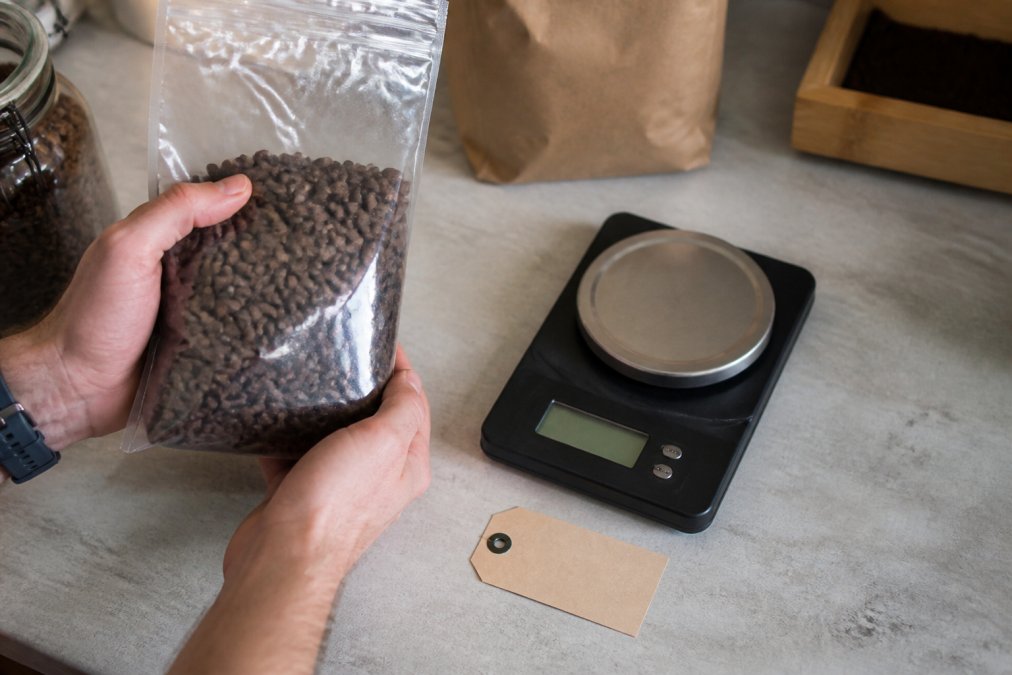
- Weigh your coffee instead of scooping. A consistent ratio, commonly 1:15 to 1:17 coffee to water by weight, means you use less coffee to get a better cup. A $15 scale saves more in beans than it costs within a month.
- Buy direct from the roaster when possible. Cutting out a marketplace middleman often removes a per-bag markup, and you get the roast date straight from the source.
What to Skip
- Do not buy a large bag of a coffee you have never tried. The most expensive mistake in home coffee is a 2-pound bag that does not suit your brewer. Start with a 12-ounce bag, confirm you like it, then size up.
- Do not chase "free shipping" on a subscription you will not use. A subscription you forget to pause is not a deal; it is a recurring charge for coffee you may not need that month.
- Do not assume darker roast means cheaper. Roast level is a flavor choice, not a price tier. A medium-dark blend from a roast-to-order roaster often costs less per fresh cup than a grocery-store dark roast that sat on a shelf for months.
U.S. Department of Agriculture coffee market and import data
Conclusion
The gap between a great bag of coffee and a disappointing one usually comes down to two things: how recently it was roasted and how you treated it after it arrived. Get the roast date, brew within the window, store it properly, and match the roast to your method. That's the entire discipline.
Food and Drug Administration guidance on food storage and labeling
If you want coffee that arrives with the clock still running, Mainline Roastery roasts to order in Muscatine, Iowa, and ships the same day. Our specialty-grade blends and single-origin beans are built for bold flavor, and we handle regular wholesale orders for offices and cafes alongside direct orders for home brewers. Get started with Mainline Roastery and taste what a short trip from roaster to cup actually does.
Frequently Asked Questions
Where can I buy fresh roasted coffee online?
Look for roasters that print a roast date on the bag, ship within 24 to 48 hours of roasting, and sell whole bean coffee rather than pre-ground. Mainline Roastery roasts to order and ships the same day, so a bag of Switchyard Blend at $17.99 arrives within days of leaving the roaster. Avoid listings that only show a 'best by' date, since that tells you nothing about when the beans were actually roasted.
How can you tell if coffee beans are fresh?
Check three things: the roast date on the bag, the smell when you open it, and how the beans behave when brewed. Fresh whole bean coffee smells sweet and bready, not flat or papery. When you pour hot water over fresh grounds, they bloom and bubble as trapped carbon dioxide escapes. If your grounds barely react, the beans have likely been sitting for months and the flavor has already faded.
How long does freshly roasted coffee stay fresh?
Peak flavor usually lands between 4 and 14 days after roasting, and most specialty beans hold up well for about 4 to 6 weeks if stored properly. After that, oxidation dulls the aroma and acidity even if the coffee is still drinkable. Buy in smaller amounts more often rather than stocking up, and keep the bag sealed, away from light, heat, and moisture. Freezing whole beans in an airtight container can stretch freshness further.
Is it better to buy coffee beans online or in-store?
Online ordering usually wins on freshness because you can buy directly from a roaster who ships within days of roasting. Grocery store bags often sit in distribution for weeks before they hit the shelf, and most carry a 'best by' date instead of a roast date. Buying online also gives you access to single-origin lots, micro-lots, and subscription options you will not find in a typical supermarket aisle.