

Table of Contents
- What Is Fair Trade Coffee and Why It Matters
- Coffee Certification Labels Explained
- Benefits of Direct Trade Coffee
- How to Read Coffee Labels for Ethical Sourcing
- Step-by-Step Guide to Identifying Ethically Sourced Coffee
- Common Mistakes to Avoid When Buying Ethical Coffee
- Conclusion
- Frequently Asked Questions
Last Updated: September 4, 2026
Ethically sourced coffee ensures farmers receive fair compensation, work under safe conditions, and use sustainable practices. Most bags claim to be ethical, but very few prove it. This guide breaks down how to identify genuinely ethical coffee beans so you can buy with confidence.
The specialty coffee industry has a transparency problem. A mountain landscape and vague "socially responsible" sticker reveal nothing about who grew the beans or what they were paid. To separate real ethical sourcing from marketing noise, look for third-party verification, origin-specific details, and roaster transparency.
What Is Fair Trade Coffee and Why It Matters
Fair trade coffee is certified by an independent organization to meet economic, social, and environmental standards for smallholder farmers. The core mechanism is a guaranteed minimum price (farm-gate price) that protects growers when global commodity prices drop and supports community investment.
In the conventional market, a significant portion of retail price never reaches the farmer. Fair trade certification corrects this by requiring price premiums that fund community development projects like schools and healthcare.
Fair trade is not perfect. Certification costs can be prohibitive for the smallest farms, and standards represent a minimum wage, not a living wage. A minimum wage keeps farmers at subsistence level; a living wage allows for savings and investment. Ask whether the roaster is simply meeting minimum bars or pushing for higher fairness.
Coffee Certification Labels Explained
Coffee certification labels are third-party verification systems that audit farms against standards for labor, environment, and price fairness. Each label has a different focus. Understanding what certifications do not guarantee, particularly the gap between minimum and living wage, is critical.
Fair Trade Certified
Fair Trade Certified guarantees a minimum price per pound (currently $1.40 for washed arabica) and requires buyers to pay an additional premium that farmers control democratically. It prohibits forced and child labor while promoting safe working conditions.
Fair Trade's minimum price keeps farming viable but does not provide a living wage. In many regions, $1.40 per pound translates to annual income well below living wage thresholds. Some roasters now pay $2.50-$4.00 per pound to approach a true living wage. Ask whether the roaster is simply meeting minimum bars or pushing for higher fairness.
Rainforest Alliance and Bird Friendly
Rainforest Alliance emphasizes environmental stewardship and biodiversity. Bird Friendly certification, administered by the Smithsonian Migratory Bird Center, requires shade-grown coffee, which preserves canopy habitat and typically results in higher-quality beans.
Rainforest Alliance does not guarantee fair wages like Fair Trade does. Many ethical roasters seek coffee holding both certifications to combine environmental and economic standards.
Organic Certification
Organic certification verifies coffee is grown without synthetic pesticides, herbicides, or fertilizers, protecting workers and water sources. In the US, the USDA regulates organic certification through annual third-party audits.
Organic certification does not guarantee fair wages. If a roaster pays commodity prices for organic coffee, the farmer absorbs extra labor costs without compensation. Look for organic coffee that also carries Fair Trade or direct trade sourcing.
Understanding the Certification Stack
The most ethically rigorous coffee carries multiple certifications (Fair Trade + Organic, Fair Trade + Bird Friendly, etc.). However, more certifications mean higher costs for farmers. The smallest farms sometimes cannot afford multiple certifications, which is why direct trade relationships can be more beneficial for tiny producers.
The Living Wage Question
When comparing certifications, the most important question is whether the price paid actually supports a living wage. Research from organizations like the Fair Trade USA impact reports shows that Fair Trade certification improves farmer income, but the improvement often falls short of a true living wage in high-cost regions. Some roasters now publish their own living wage calculations and commit to paying above the Fair Trade minimum to approach that threshold. If a roaster claims ethical sourcing, ask them directly: "What is the living wage in the regions you source from, and are you paying above it?" A roaster that has done this analysis will have the answer ready.
Benefits of Direct Trade Coffee
Direct trade is a purchasing philosophy where roasters build long-term relationships directly with farmers or cooperatives, paying well above commodity prices. Benefits include higher quality beans and significantly better farmer-paid prices due to removed middlemen.
Direct trade relies entirely on roaster honesty, there is no independent auditor. A roaster practicing genuine direct trade will publish farm-gate prices and name partner farms. If a roaster claims direct trade but offers no origin-specific information, treat the claim with skepticism.
For roasters sourcing single-origin beans, the direct trade model aligns with bold flavor profiles because higher-quality, fairly-priced beans taste better. The relationship allows control over harvest timing and processing, preserving bean characteristics.
How to Read Coffee Labels for Ethical Sourcing
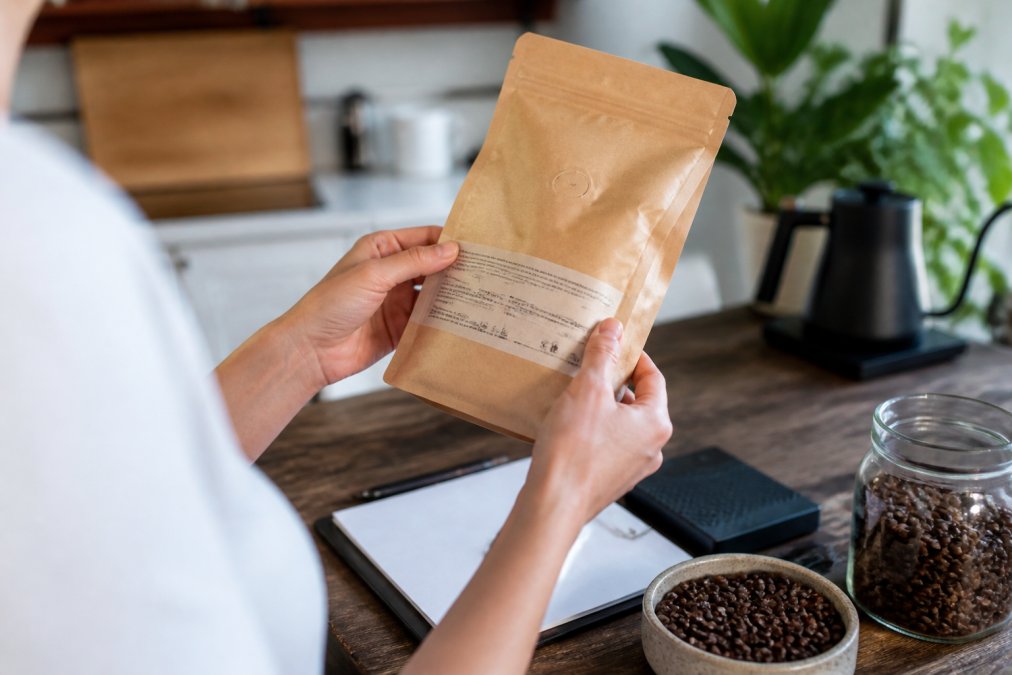
Reading a coffee label means separating verifiable facts from vague marketing language. A truly ethical bag provides information to trace the coffee back to a specific farm or cooperative.
Check for Origin-Specific Information
A red flag is a bag that only says "Blend" or "House Blend" with no country of origin. Look for specific details: country, region, farm or cooperative name, and varietal. A bag naming a single farm in a specific region tells a far more credible story than one saying "Africa" or "Ethiopian Blend."
Be wary of bags listing only a country and "single-origin" without a region. Single-origin means one country, not one farm. A roaster that cannot name the specific region is likely sourcing through a commodity broker.
Verify Farmer-Paid Prices and Supply Chain Transparency
Look for evidence that the roaster pays more than the commodity rate. Some roasters print the price they paid per pound directly on the bag, for example, "We paid $4.50/lb for these beans." Others publish this data in annual impact reports on their websites or on individual product pages. According to the Specialty Coffee Association's transparency resources, roaster transparency about farm-gate prices is a key indicator of a genuine commitment to economic fairness.
If price information is absent, ask the roaster directly. A roaster genuinely committed to ethical sourcing will have this number ready and explain how it compares to the Fair Trade minimum or global commodity price. If a roaster becomes defensive, shop elsewhere.
Check whether the roaster names the cooperative or farm on the bag. "Sourced from a cooperative in Peru" is less transparent than "sourced from the Cooperativa Agroecológica Pangoa." Named sources allow independent verification.
Spot Greenwashing Red Flags
Greenwashing is the practice of making misleading claims about environmental or social benefits. The most common greenwashing tactics in coffee marketing include:
Imagery without certification. A bag with a rainforest landscape, a farmer's face, or a lush mountain scene is not proof of ethical sourcing. These images are cheap to print and cost nothing to use. If the bag shows a rainforest, look for the Rainforest Alliance logo or the Smithsonian Bird Friendly seal. If neither is present, the imagery is decoration, not verification.
Vague sustainability language. Words like "sustainable," "responsible," "conscious," and "ethical" are unregulated marketing terms. A bag that says "sustainably sourced" without a third-party certification or linked data is making an unsubstantiated claim. The Federal Trade Commission's Green Guides outline how the US government expects environmental claims to be substantiated; if a claim cannot be backed by a certification, published data, or a specific practice, it is just a decoration.
Direct trade claims without proof. Direct trade is not a regulated term, and roasters often use it loosely. A roaster claiming direct trade should name the farms or cooperatives, publish the prices paid, or provide photos and details from origin visits. If a bag says "direct trade" but the roaster's website has no farm names, no price data, and no origin stories, the claim is hollow. Genuine direct trade roasters treat their farmer relationships as a core part of their brand story.
Fair trade logos that are outdated. Certification logos expire. A bag with a Fair Trade Certified logo might be old stock from a batch that lost certification years ago. Before buying, verify the certification status on the certifying body's public database. Fair Trade USA and the Rainforest Alliance both maintain searchable directories where you can enter a producer's name and confirm current certification status.
Carbon-neutral or eco-friendly shipping claims without detail. Some roasters claim "carbon-neutral shipping" or "eco-friendly delivery" but provide no explanation of how. Ask the roaster directly: Do they use ocean freight instead of air freight? Do they offset emissions through a verified carbon credit program? Do they consolidate shipments to reduce per-unit emissions? Vague environmental claims about logistics are a common greenwashing tactic.
How to Verify Claims Independently
After reading the label, verify claims on the roaster's website or through a certification database. Use Fair Trade or Rainforest Alliance IDs to confirm current certification. Search for named cooperatives online to verify they exist. This takes five minutes and exposes most false claims.
Step-by-Step Guide to Identifying Ethically Sourced Coffee
Step 1: Research the Roaster's Transparency Practices
Look for a dedicated sourcing page that names farms or cooperatives and explains the purchasing model. A roaster proud of its sourcing will talk about it openly.
Step 2: Verify Third-Party Certifications
Check whether the certifications on the bag are current. Certification bodies like Fair Trade USA and the Rainforest Alliance maintain public databases where you can verify a producer's certification status. A logo printed on a bag means nothing if the farm lost its certification two years ago.
Step 3: Confirm Direct Trade or Cooperative Relationships
If the roaster claims direct trade, look for proof: photos from origin visits, named partners, or published price data. If sourced through a cooperative, check whether it is democratically run and holds certifications.
Step 4: Check Environmental Stewardship Claims
Evaluate the environmental footprint. Look for organic or Bird Friendly certifications and consider shipping emissions. Some roasters offer carbon-neutral shipping or use ocean freight instead of air freight.
Common Mistakes to Avoid When Buying Ethical Coffee
The most common mistake is trusting a single certification logo without understanding what it covers. Fair Trade does not guarantee organic farming, and organic does not guarantee fair labor. Stack the evidence based on what matters most to you.
Another frequent error is ignoring the roast date. Ethically sourced beans roasted eight months ago will taste flat and stale. Look for a roast date within two to four weeks of purchase.
A third mistake is assuming higher price always equals ethical sourcing. A roaster can charge luxury prices for commodity-grade beans. Always verify the sourcing story behind the price.
Conclusion
Identifying ethically sourced coffee requires moving past pretty labels and asking harder questions about traceability, farmer-paid prices, and supply chain transparency. The most reliable signals are third-party certifications, origin-specific information, and roasters who openly publish sourcing data.
At Mainline Roastery LLC, bold flavor starts with honest sourcing. Our specialty coffee is roasted fresh in Muscatine, Iowa, with single-origin beans selected for taste and transparent supply chains. Get started with Mainline Roastery and taste the difference ethically sourced, freshly roasted beans make.
Frequently Asked Questions
What is the difference between Fair Trade and ethically sourced coffee?
Fair Trade certification is one specific standard that guarantees minimum prices and labor conditions through third-party verification. Ethically sourced coffee is broader, it encompasses fair trade, direct trade, organic, and other practices that prioritize farmer welfare, environmental stewardship, and supply chain transparency. A coffee can be ethically sourced without Fair Trade certification if the roaster maintains direct relationships with smallholder farmers and pays living wages. The key difference: Fair Trade is a label you can verify; ethical sourcing is a commitment that requires research into the roaster's actual practices.
How can I verify coffee certification labels are legitimate?
Look for third-party certifications from organizations like Fair Trade USA, Rainforest Alliance, or the Smithsonian's Bird Friendly program. Visit the certifying body's website and use their search tool to confirm the roaster's certification status. Check the roaster's website for supply chain audit reports, farmer impact statements, or direct trade partnerships. Be skeptical of vague claims like 'ethically sourced' or 'sustainably grown' without a specific certification or transparency report backing them up. Legitimate roasters publish information about their sourcing practices, farm-gate prices, and environmental practices openly.
What should I look for on a coffee bag to identify ethical sourcing?
Check for: certification logos (Fair Trade, Rainforest Alliance, Bird Friendly, organic), the specific farm or cooperative name, the country and region of origin, the roast date, and the roaster's transparency statement. Look for mentions of direct trade relationships, living wage commitments, or shade-grown practices. Avoid bags with only generic claims like 'premium' or 'sustainable' without supporting details. The more specific the origin information and the more certifications listed, the more likely the roaster has invested in traceability and supply chain verification.
Is there a difference between living wage and minimum wage in coffee sourcing?
Yes, and it matters significantly. Minimum wage is the legal floor set by government, often far below what farmers need to cover basic expenses in coffee-growing regions. A living wage accounts for housing, food, healthcare, education, and transportation in the specific region where the coffee is grown. Many Fair Trade and direct trade roasters commit to living wage premiums that exceed minimum wage requirements. When evaluating ethical coffee, look for roasters that explicitly mention 'living wage' commitments rather than just 'fair prices.' This distinction shows the roaster understands the real cost of sustainable farming.
This article was written using GrandRanker