

Table of Contents
- What 'Stronger' Actually Means in Coffee
- Light Roast vs Dark Roast Caffeine: What the Numbers Say
- Light Roast vs Dark Roast Taste: Why Dark Tastes Bolder
- How to Brew Light Roast Coffee for Maximum Flavor
- Realistic Dose Comparisons: What a Cup Actually Delivers
- Why Caffeine Content Varies More Than You Think
- Conclusion
- Frequently Asked Questions
Last Updated: October 14, 2026
What 'Stronger' Actually Means in Coffee
Here's the short answer: a light roast coffee usually packs slightly more caffeine than a dark roast when you weigh the beans. But "stronger" is a slippery word.
So before we compare numbers, let's settle what you're actually asking. This guide from Mainline Roastery LLC walks through the caffeine facts, the taste differences, and how to brew a light roast so it tastes as good as it smells.
"Stronger" in coffee has two meanings: caffeine strength (how much stimulant is in the cup) and taste strength (how bold or bitter it tastes). Most people mix these up. That mix-up is the source of nearly every argument about light roast vs dark roast.
Caffeine Strength vs. Taste Strength
Caffeine strength is measurable. You can weigh it. Taste strength is what your tongue tells you, and it's shaped by roast level, grind, and brew method.
Dark roasts taste stronger because roasting builds bitter, smoky compounds. That bold flavor tricks your brain into thinking there's more caffeine. There usually isn't.
Light Roast vs Dark Roast Caffeine: What the Numbers Say
The common claim is that dark roast has more caffeine because it tastes stronger. That claim gets the science backwards.
Bean for bean, light roast coffee tends to edge out dark roast on caffeine. The reason is simple: caffeine is heat-stable, so roasting doesn't destroy much of it. But roasting does burn off moisture and mass.
That single fact explains most of the confusion.
Caffeine by Weight vs. Caffeine by Volume
Measure by weight and light roast wins slightly. Measure by volume and dark roast can win, because dark beans are less dense, so a scoop holds more of them.
| Measurement Method | Light Roast | Dark Roast | Why |
|---|---|---|---|
| By weight (grams) | Slightly higher caffeine | Slightly lower caffeine | More caffeine survives light roasting |
| By volume (scoop) | Lower caffeine per scoop | Higher caffeine per scoop | Dark beans are less dense |
| Net difference | Small | Small | The gap is minor either way |
The difference is real but small. We're talking a few milligrams per cup, not a jolt you'd notice.
How Roasting Changes Bean Weight and Density
Roasting is a controlled burn. As beans heat up, they lose moisture, expand in size, and drop in weight.
That's why a pound of dark roast holds more beans than a pound of light roast. Same weight, more individual beans.
The caffeine retention per bean stays high across all roast levels. What changes is the bean's weight and size, not the caffeine's willingness to stick around.
Light Roast vs Dark Roast Taste: Why Dark Tastes Bolder
Dark roast tastes bolder because of the roast, not the caffeine. Longer roasting time caramelizes sugars and builds the bitter, smoky notes people call "bold."
Light roast keeps more of the bean's natural character. You taste the origin: the fruit, the floral notes, the brightness. That's why light roasts often read as delicate rather than heavy.
Flavor Compounds, Acidity, and Perceived Strength
Acidity in coffee is a good thing. It's the bright, lively snap, not the sour burn of spoiled milk. Light roasts hold onto more of it.
Roasting breaks down acids and builds bitter compounds. So a dark roast trades brightness for boldness. Neither is better.
Here's the part most people get wrong: perceived strength is about flavor, not caffeine. A dark roast tastes stronger because your brain reads bitterness as potency.
How to Brew Light Roast Coffee for Maximum Flavor
Light roast coffee needs a little more care than dark roast. The beans are denser, so water struggles to pull out the flavor. Adjust your brew and the cup rewards you.
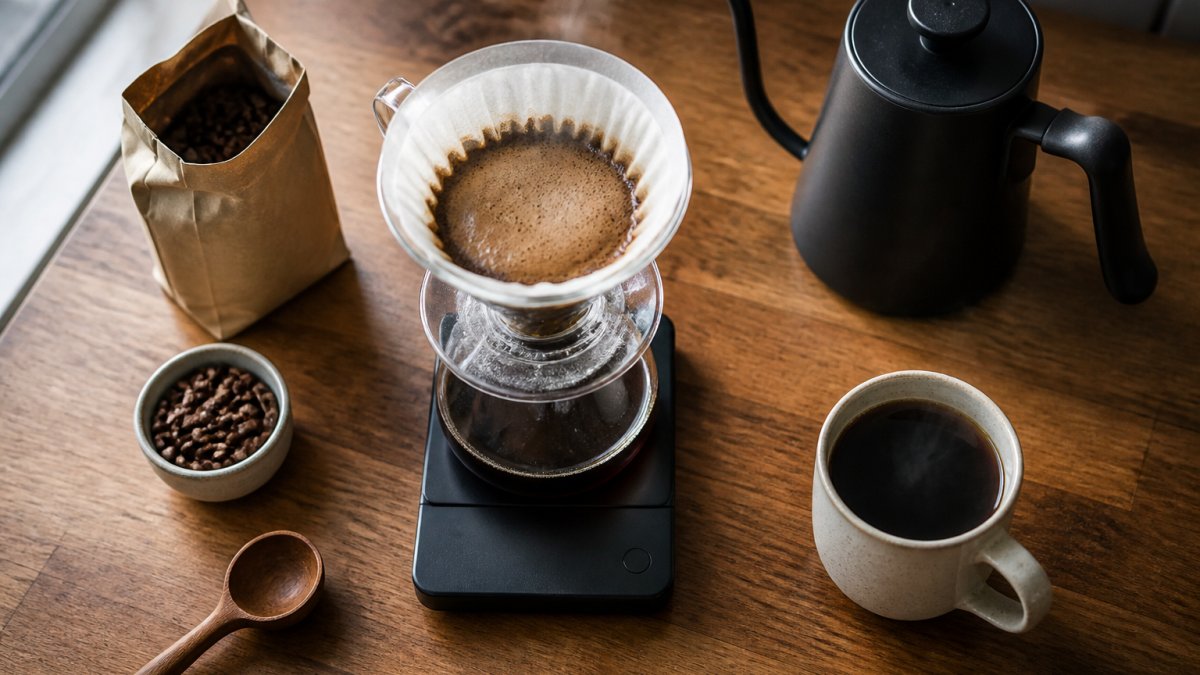
Start with a finer grind than you'd use for dark roast. Denser beans need smaller particles so water can reach the flavor inside.
Grind, Water Ratio, and Temperature Adjustments
Three settings do most of the work:
- Grind: Go one step finer than your usual setting. Light beans resist extraction.
- Water ratio: Start at 1 gram of coffee to 16 grams of water, then adjust to taste.
- Temperature: Use water just off the boil, around 200°F, to pull flavor from dense beans.
Weigh your beans instead of scooping. A digital scale removes the guesswork and keeps your cup consistent from batch to batch.
Realistic Dose Comparisons: What a Cup Actually Delivers
Most articles stop at "weigh your beans." That's good advice, but it doesn't tell you what actually lands in your mug. Let's walk through the arithmetic with realistic brew recipes, then give you a test you can run at home.
Start With a Real Recipe
A common pour-over recipe looks like this:
- Coffee dose: 18 grams
- Water: 300 grams (about 10 fluid ounces)
- Grind: medium-fine
- Water temperature: 200°F
- Total brew time: 2:30-3:00
Brewed coffee typically lands somewhere in the range of 95-165 mg of caffeine per 8-ounce cup, depending on dose, bean, and extraction. That range is wide on purpose, it reflects real variability, not a single fixed number. A 10-ounce pour-over built on an 18-gram dose usually sits in the lower-to-middle part of that range.
The Same Recipe, Two Roasts
Hold the recipe constant and swap only the roast level. Because caffeine is largely heat-stable, the light roast and dark roast beans start with similar caffeine per bean. The difference shows up in mass:
- By weight: 18 g of light roast and 18 g of dark roast deliver nearly the same caffeine. Light roast may edge ahead slightly because dark roast loses a bit more mass to the longer roast.
- By volume: Two level tablespoons of dark roast can weigh more than two level tablespoons of light roast, because dark beans are less dense. That means a scoop-based dark roast can quietly deliver more caffeine than a scoop-based light roast, the opposite of what most people expect.
Same beans, same recipe, two answers. This is why "is light roast coffee stronger" has no clean yes or no. It depends on whether you're measuring mass or volume.
A Repeatable Home Test
You don't need a lab. You need a scale and a little discipline.
- Pick one bean. Buy a light roast and a dark roast from the same roaster if you can. Same origin is ideal, but same roaster is the minimum.
- Weigh, don't scoop. Use a digital kitchen scale accurate to 0.1 g. Dose 18 g of each.
- Brew identically. Same water weight, same grind setting, same temperature, same time.
- Taste blind. Have someone else label the cups A and B. Rate boldness, bitterness, and how "strong" each feels.
- Note your reaction. Most people find the dark roast tastes bolder even when the caffeine is essentially matched. That's the flavor-versus-caffeine gap in action.
Run the test twice. If your results flip, that's the point, roast level is a small lever, and your perception is doing a lot of the work.
Serving Size Is the Biggest Lever
A 6-ounce cup and a 16-ounce mug are not the same drink, even from the same pot. Double the volume, double the caffeine. If you're chasing a specific caffeine target, adjust your serving size before you fuss over roast level, it moves the number far more.
What This Means for Your Cup
If you want more caffeine, weigh your beans, brew a larger serving, and lean light. If you want a bolder taste, choose dark and accept that the caffeine is roughly the same. The roast is a flavor decision. The dose and the serving size are the caffeine decisions.
Why Caffeine Content Varies More Than You Think
Roast level is only one factor, and usually a minor one. The bigger swings come from everything else, and the honest answer is that caffeine content is a range, not a fixed number. Here's how to think about the uncertainty.
The Factors, Roughly Ranked
From largest effect to smallest, here's the order most practitioners would put these in:
- Serving size. Doubling your cup roughly doubles your caffeine. Nothing else comes close.
- Dose. More grams of coffee means more caffeine, almost linearly. This is why weighing matters.
- Bean variety and origin. Some coffee plants naturally produce more caffeine than others. Robusta, for example, typically carries roughly twice the caffeine of arabica. Growing conditions, altitude, and processing shift the number too.
- Brew method and extraction. Grind size, water ratio, temperature, and steep time change how much caffeine actually lands in your cup. A coarse grind and a short brew leave caffeine behind. A fine grind and a long steep pull more out.
- Roast level. Real, but small, usually a few milligrams per cup, not a jolt you'd notice.
That ranking is the part most articles skip. It's also the part that answers the question.
Why You Shouldn't Trust a Single Number
If you see a claim like "light roast has 5% more caffeine," treat it as a rough average, not a rule. Bean-to-bean variation, brew-to-brew variation, and measurement error can all swamp a 5% difference.
This doesn't mean roast level is irrelevant. It means the difference is small enough that your dose and serving size will almost always matter more.
A Simple Way to Track Your Own Intake
You don't need a lab to get a useful estimate. You need consistency.
- Weigh your beans. A digital scale removes the biggest source of guesswork.
- Fix your recipe. Same dose, same water, same grind, same time. Change one variable at a time.
- Log your cups. Note the dose, the serving size, and how you felt. Patterns show up fast.
- Use published ranges as a guide, not a promise. If a bag or a database says "about 120 mg per cup," treat it as a midpoint, not a guarantee.
Individual Sensitivity Matters Too
Caffeine affects people differently. Body weight, genetics, medications, and tolerance all change how a given dose lands. General guidance from public health sources suggests most healthy adults can consume up to about 400 mg of caffeine per day without adverse effects, but individual limits vary (the FDA). If you're pregnant, nursing, or managing a health condition, talk to a clinician about your intake.
Conclusion
The caffeine gap between light and dark roast is small, and taste is where the real difference lives. What actually changes your cup is how you measure and brew.
At Mainline Roastery LLC, we roast fresh blends and single-origin beans and ship them fast, so the flavor peaks in your kitchen, not on a shelf.
Frequently Asked Questions
Does light roast coffee have more caffeine than dark roast?
By weight, light roast beans contain slightly more caffeine because they lose less mass during roasting. However, when measured by volume (scoops), dark roast often delivers more caffeine because the beans are less dense and pack more tightly into a scoop. The difference is usually small, so your brew method and dose matter more than roast level.
Which coffee is strongest: light, medium, or dark roast?
It depends on how you define strong. If you mean caffeine per gram, light roast edges out dark roast. If you mean bold, bitter taste, dark roast wins because roasting creates more intense flavor compounds. For a caffeine jolt, focus on dose and brew ratio rather than roast level.
How can I make light roast coffee taste stronger?
To boost flavor intensity in light roast coffee, use a finer grind, increase your coffee-to-water ratio, and brew with water just off boil (around 200-205°F). Light roasts are denser, so they need more extraction energy. A longer brew time or a higher dose also helps without making the cup bitter.
Does roast level affect caffeine per scoop or per gram?
Yes, but differently. Per gram, light roast has slightly more caffeine because beans lose weight during roasting. Per scoop, dark roast often has more because its lower density means more beans fit in the same volume. Weighing your coffee is the only way to compare accurately.