

Table of Contents
- Why Roast Level Defines Your Morning Espresso
- The 5 Best Coffee Bean Roast Levels for Morning Espresso
- Espresso Roast vs Medium Roast: What Actually Changes in the Cup
- How to Choose Espresso Beans Without Guessing
- How to Pull a Balanced Espresso Shot at Home
- Roast Level, Caffeine, and Freshness: What Most Guides Get Wrong
- Conclusion: Pick Your Roast, Then Dial It In
- Frequently Asked Questions
Last Updated: October 2, 2026
Why Roast Level Defines Your Morning Espresso
Roast level is the biggest lever you control over how your morning espresso tastes, more than origin, price, or equipment brand. The 5 best coffee bean roast levels for morning espresso each deliver a different cup: light roasts pour bright and fruit-forward, medium roasts balance sweetness and acidity, and dark roasts bring chocolate and smoke.
Here's the part most guides skip: roast level changes how a bean dissolves in water. Darker beans are more porous and extract faster, so a grind and shot time that works for a light roast tastes bitter and hollow on a dark roast. That explains why so many home baristas blame their machine when the real problem is the bag.
Below, we break down all five roast levels and how to dial in a balanced shot without guessing.
The 5 Best Coffee Bean Roast Levels for Morning Espresso
The 5 best coffee bean roast levels for morning espresso run from light to dark, each suiting a different drinker and machine.
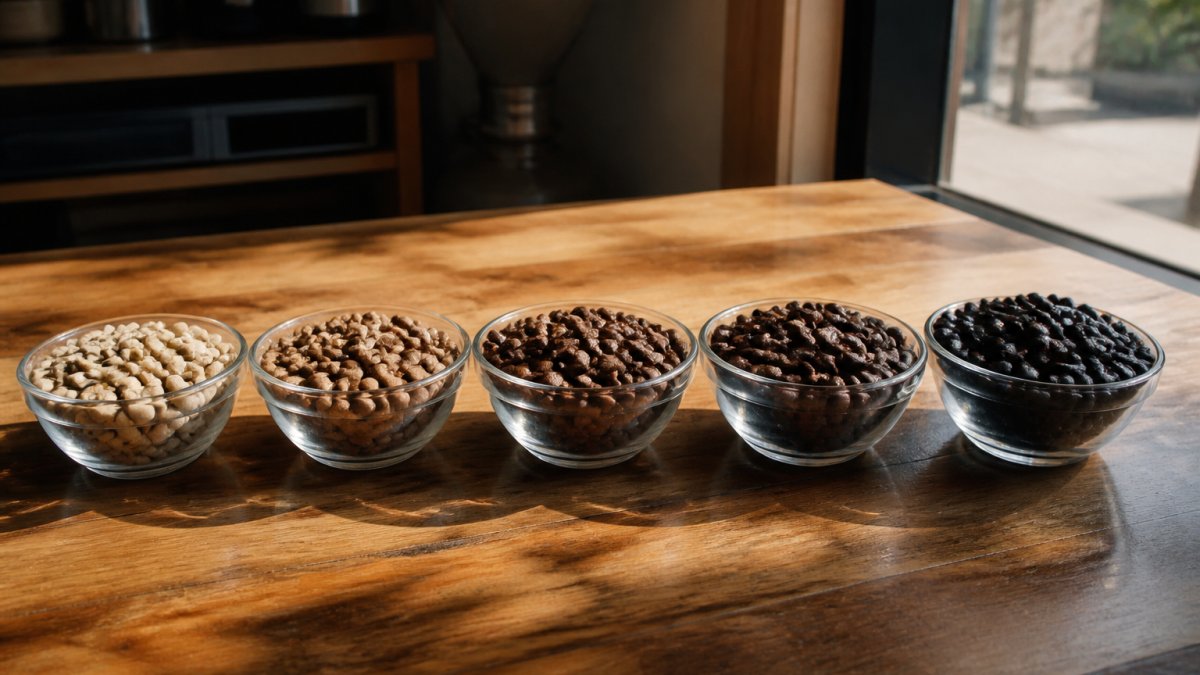
Here's how they compare before we go deeper:
| Roast Level | Flavor Profile | Acidity | Best For |
|---|---|---|---|
| Light | Fruit, citrus, floral | High | Pour-over fans, milk-free shots |
| Medium | Caramel, nuts, balanced | Medium | Most home espresso setups |
| Medium-Dark | Chocolate, caramel, praline | Medium-Low | Milk drinks, daily routine |
| Dark | Smoke, bittersweet cocoa | Low | Bold shots, low-acid needs |
| Blonde | Honey, toasted grain | Medium-High | Lighter, sweeter espresso |
Light Roast: Bright Acidity and Fruit-Forward Shots
Light roast beans stop roasting just after first crack, the moment the bean audibly pops and expands. The result is a dense bean with high acidity, a lighter body, and notes of citrus, berry, and floral. In espresso, light roasts show their fruit only if you grind finer and pull longer, because the dense bean resists extraction, pull one too fast and you get a sour, thin shot.
Medium Roast: The Balanced Morning Standard
Medium roast is the safest starting point for most home espresso setups. Roasted through first crack and stopped before second crack, these beans balance sweetness and acidity with a rounder body and notes of caramel and nuts. They extract predictably across many grind settings, which is why they forgive small mistakes, if you're new to pulling shots, start here.
Medium-Dark Roast: Chocolate, Caramel, and Consistency
Medium-dark roast is where espresso traditions live. The longer roast develops caramelization, producing bittersweet chocolate, caramel, and praline notes with a heavier mouthfeel. These beans are more soluble, so they pull consistently and hold up under milk.
Our Switchyard Blend is a medium-dark roast built exactly for this: a union of Caturra and Ethiopia Heirloom beans from East Africa and South America, with notes of bittersweet chocolate, toasted marshmallow, candied orange, and praline. It's roasted to order and shipped the same day, so it reaches your grinder fresh rather than warehouse-stale. For espresso, start at a 1:2 ratio and adjust from there.

Dark Roast: Bold, Smoky, and Low-Acid
Dark roast beans are roasted past second crack, where sugars caramelize heavily and oils migrate to the surface. The cup turns bold and smoky with low acidity and a bittersweet finish, ideal if you want a shot that punches through milk or you're sensitive to acidity. The trade-off is control: dark beans extract fast, so a few seconds too long turns the shot ashy.
Blonde Roast: The Lightest End of the Spectrum
Blonde roast sits at the lightest end of the spectrum, pulled from the roaster earlier than a standard light roast. It keeps more of the bean's origin character, with honey and toasted grain notes and a lighter body. Blonde roasts are the least forgiving in espresso because they're the densest and hardest to extract evenly.
They're worth the effort if you drink your espresso black and want the sweetness up front.
Espresso Roast vs Medium Roast: What Actually Changes in the Cup
"Espresso roast" is not a distinct species of bean or a legally defined category.
Here is what actually shifts when you move from a medium roast to a darker espresso roast:
| Variable | Medium Roast | Darker Espresso Roast |
|---|---|---|
| Bean density | Higher, denser cell structure | Lower, more porous |
| Solubility | Slower to extract | Faster to extract |
| Surface oils | Minimal | Visible sheen by day 5-10 |
| Ideal grind | Finer | Coarser |
| Typical shot window | 27-32 seconds | 22-27 seconds |
| Degassing rest | 5-10 days post-roast | 3-7 days post-roast |
| Milk compatibility | Moderate | High |
Those numbers are starting points, not rules. A denser medium roast resists water, so you grind finer and pull longer to reach the same extraction yield.
Equipment matters here too. On a manual machine with a lever or flow-control paddle, you can compensate for a dense medium roast by extending pre-infusion and slowing the flow.
Rest period is the variable almost nobody talks about. A medium roast needs roughly 5 to 10 days off the roast date before it pulls cleanly, because the bean is still releasing carbon dioxide that disrupts water contact. A darker roast degasses faster, often landing in its sweet spot 3 to 7 days post-roast. Pull a shot on day two of either roast and you'll get thin, foamy, uneven extraction no grinder adjustment can fully fix.
The Specialty Coffee Association's roast color standards classify roast degree by measurable color rather than by name, which is why two bags both labeled "medium" can taste miles apart. Color is the honest signal; the word on the front of the bag is not.
Switchyard Blend Medium-Dark Roast Coffee 12 oz →
How to Choose Espresso Beans Without Guessing
Choosing espresso beans starts with your drink, not the label. Milk drinks: go medium-dark or dark. Straight shots with fruit: light or blonde. A bean that works every morning without fuss: medium.
Then check three things on the bag:
- Roast date, not best-by date. Freshness drives flavor, and a roast date tells you the truth.
- Whole bean over pre-ground. Grind size is the variable you adjust most, and pre-ground locks it in.
- Origin and processing. Natural and washed processing change sweetness and clarity.
A common mistake is buying based on origin alone. A washed Ethiopian and a natural Ethiopian taste completely different, and roast level sits on top of both.
How to Pull a Balanced Espresso Shot at Home
Pulling a balanced espresso shot means matching dose, grind, and time to your bean. Start with a 1:2 brew ratio, 18 grams in, about 36 grams out, and aim for a shot time between 25 and 30 seconds.
Here's the workflow:
- Dose consistently. Weigh your beans, don't scoop them.
- Grind fresh. Whole bean ground seconds before brewing keeps aroma in the cup.
- Adjust grind, not pressure. Sour shot? Grind finer. Bitter? Grind coarser.
- Watch the shot time. Fast and thin means under-extracted; slow and syrupy means over-extracted.
- Taste, then repeat. Change one variable at a time.
Crema tells you about freshness and pressure, not quality. A thick crema on a stale bean is still a stale bean.
Roast Level, Caffeine, and Freshness: What Most Guides Get Wrong
Two myths refuse to die: darker roasts have more caffeine, and fresh beans are always best. Both are wrong in ways that change how you buy.
Caffeine vs. roast level. Caffeine is remarkably stable through roasting. It barely degrades at typical roast temperatures, so a light roast and a dark roast of the same green coffee start with essentially the same caffeine content.
Freshness and degassing. Coffee releases carbon dioxide for days after roasting, a process called degassing. Brew too soon and the escaping gas pushes water away from the grounds, producing uneven, foamy, sour shots. The rest period is not optional, and it varies by roast level:
- Light and blonde roasts: 7-14 days post-roast. Dense beans hold gas longer.
- Medium roasts: 5-10 days post-roast. The most forgiving window for most home setups.
- Medium-dark roasts: 4-8 days post-roast. A reliable everyday range.
- Dark roasts: 3-7 days post-roast. Porous beans shed gas quickly.
A roast date on the bag tells you where you are in that window. A best-by date does not. According to USDA guidance on food date labeling, date labels are about quality rather than safety, and coffee is no exception. Buy from roasters who print the roast date, and if the bag arrives less than three days off the roast, give it a few more days before you judge it.
Sustainability and sourcing. Roast level tells you nothing about how the beans were grown, who grew them, or what they were paid.
Conclusion: Pick Your Roast, Then Dial It In
Most espresso frustration comes from fighting the bean instead of working with it. Pick the roast level that matches your drink and your patience, then adjust grind and shot time until the cup tastes right.
At Mainline Roastery LLC, we roast to order and ship the same day, so your beans arrive fresh instead of sitting in a warehouse. Our Switchyard Blend medium-dark roast delivers chocolate, caramel, and praline notes that hold up in milk and straight shots alike, and our single-origin and blend lineup gives you room to explore every roast level on this list. Get started with Mainline Roastery and pull a shot worth waking up for.
Frequently Asked Questions
Is light or dark roast better for espresso?
Neither is objectively better. Light roasts pull brighter, fruit-forward shots with more acidity and a thinner body, which suits drinkers who want clarity in the cup. Dark roasts deliver heavier body, lower acidity, and bittersweet chocolate or smoky notes that hold up well with milk. The best coffee roast for your morning espresso depends on whether you drink it straight or with milk, and on how your grinder and machine handle dense versus porous beans.
Does roast level affect caffeine content in espresso?
Less than most people assume. Caffeine is largely stable during roasting, so a dark roast does not lose meaningful caffeine to the heat. What does change is bean density and volume: dark roasted beans weigh less per scoop, so if you measure by volume rather than weight, a dark roast shot can end up with slightly less caffeine. Weigh your dose in grams for consistency.
How do I choose espresso beans for a long work shift?
Look for a medium or medium-dark roast with a blend of cultivars, which tends to hold its flavor as it cools instead of going flat. The Switchyard Blend from Mainline Roastery is a medium-dark option built on Caturra and Ethiopia Heirloom beans with notes of bittersweet chocolate, toasted marshmallow, candied orange, and praline. It is roasted to order and shipped the same day, so the bag arrives fresh rather than sitting in a warehouse.
What grind size and ratio should I use for a balanced espresso shot?
For espresso, aim for a 1:2 ratio. For drip brewing, a 1:15 ratio is a solid baseline.