

Table of Contents
- Start With Coffee Extraction Basics
- How to Adjust Coffee Grind Size to Cut Bitterness
- The Ideal Water Temperature for Coffee Brewing
- Shorten Your Brew Time
- Dial In Your Coffee-to-Water Ratio
- Bean Roast Profile and Freshness: The Bitter Coffee Fix You're Missing
- Equipment-Specific Calibration for Your Brewing Method
- Clean Your Brewing Equipment and Check Your Water
- Frequently Asked Questions
Last Updated: October 2, 2026
Start With Coffee Extraction Basics
Bitter coffee is almost always an extraction problem, not a bean problem. When hot water pulls too many compounds from the grounds, you taste it as sharp, dry, and harsh on the back of your tongue. This guide walks you through every fix, from grind size to water quality.
Coffee extraction is the process of hot water dissolving soluble compounds from ground coffee beans. Get it right and you taste sweetness, fruit, and balance. Get it wrong on the high side and bitterness takes over.
What Over-Extraction Actually Tastes Like
Over-extraction tastes bitter, dry, and sometimes chalky, leaving a lingering harshness water alone won't rinse away. Most bitter coffee comes from the brew, not the roast, even good beans taste terrible if your grinder is set too fine.
The Four Variables That Control Extraction
Four things decide how much flavor ends up in your cup:
- Grind size controls surface area
- Water temperature controls how fast compounds dissolve
- Brew time controls total contact
- Coffee-to-water ratio controls strength and balance
How to Adjust Coffee Grind Size to Cut Bitterness
To cut bitterness, grind coarser. A coarse grind slows extraction because water has less surface area to work with, so fewer bitter compounds end up in your cup.
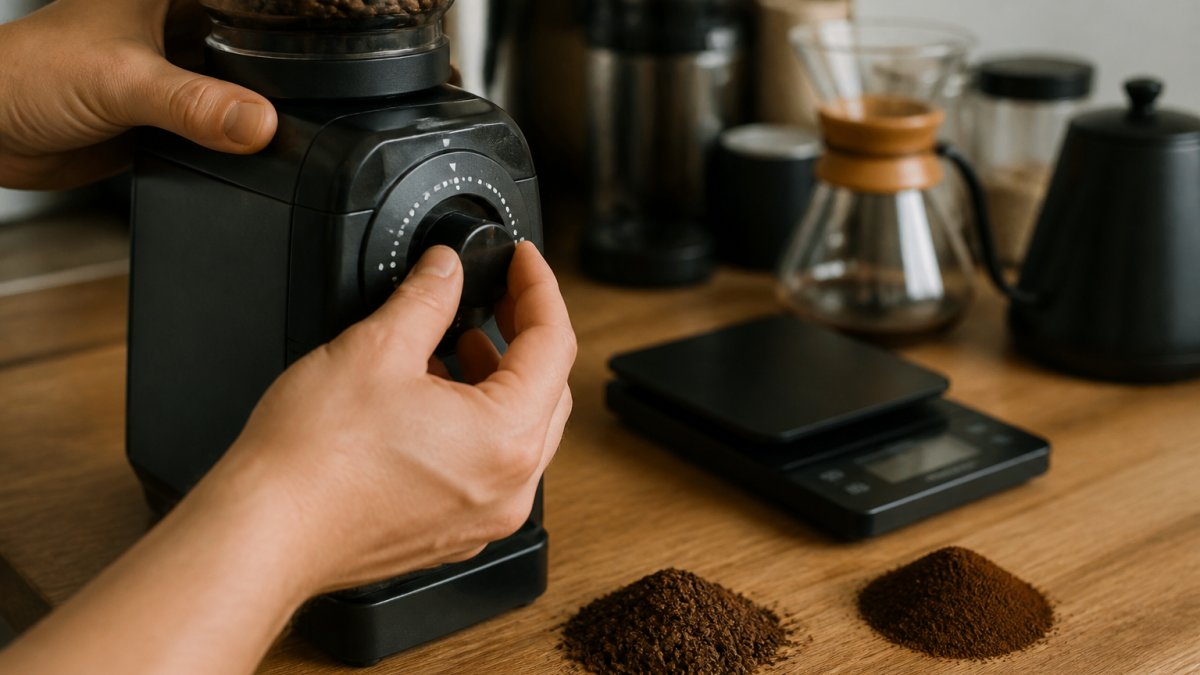
Coarse vs Fine: Which Way to Turn the Dial
Turn the dial toward coarse when the cup tastes bitter, toward fine when it tastes sour or weak. Quick reference:
| Brew Method | Grind Setting | Typical Brew Time |
|---|---|---|
| French press | Coarse | 4 minutes |
| Drip machine | Medium | 5 minutes |
| Pour-over | Medium-fine | 3 minutes |
| Espresso | Fine | 25-30 seconds |
| Cold brew | Extra coarse | 12-18 hours |
The Ideal Water Temperature for Coffee Brewing
The ideal water temperature for coffee brewing sits between 195°F and 205°F. Above that range strips bitter compounds fast; below it leaves the cup sour and flat.
Shorten Your Brew Time
Cutting brew time is the second-fastest fix for bitter coffee. Every extra second of contact pulls more tannins and harsh compounds into the cup.
- French press: 4 minutes, then press
- Pour-over: 3 minutes total
- Drip: 5-6 minutes
- Espresso: 25-30 seconds
Dial In Your Coffee-to-Water Ratio
A common starting ratio is 1:16, one gram of coffee to sixteen grams of water. Too much coffee per ounce makes a strong, bitter cup; too little makes it weak and sour. Use a digital scale, since scoops vary too much to be reliable.
- 1:15 for a bolder, stronger cup
- 1:16 for a balanced everyday brew
- 1:17 for a lighter, brighter cup
Bean Roast Profile and Freshness: The Bitter Coffee Fix You're Missing
Most guides treat bitterness as a brewing error. Sometimes it is. But sometimes the bitterness is baked into the bean before it touches water, and no grind adjustment fixes a flavor the roast created on purpose.
Why Dark Roasts Taste Bitter Before You Brew Them
Roasting develops the sugars and acids that read as sweetness and fruit while pushing the bean toward darker, smokier, more bitter compounds. The longer and hotter the roast, the further that second process runs. By the time a bean hits a dark roast profile, much of its original acidity has been cooked off, leaving caramelized sugar, smoke, and a dry, cocoa-like bitterness, not a defect, but the profile.
Match Your Brewing Method to the Roast
Roast level and brew method interact, and ignoring that pairing causes bitter cups.
- Dark roasts dissolve faster because the bean is more porous after a longer roast. They do well with cooler water (closer to 195°F), a coarser grind, and a shorter contact time. A dark roast in a French press with a four-minute steep and near-boiling water is a recipe for a harsh cup.
- Light roasts are denser and resist extraction. They want hotter water (closer to 205°F), a finer grind, and a bit more time. Under-extracted light roasts taste sour and thin, not bitter, so don't coarsen the grind on a light roast just because you associate coffee with bitterness.
- Medium roasts are the safe middle. Start at 200°F, a medium grind, and a standard ratio, then adjust one variable at a time.
Freshness, Staleness, and the Bitterness Trap
Freshness is where a lot of people misdiagnose the problem. Beans roasted within roughly two to four weeks of brewing taste best; after that they lose aromatic compounds and taste flat and papery.
A Quick Roast-Level Decision Tree
- Cup tastes sharp, dry, and harsh on the back of the tongue, and you're brewing a dark roast at high temperature: lower the water temperature and coarsen the grind slightly.
- Cup tastes sour, thin, and bright, and you're brewing a light roast: raise the water temperature and grind finer.
- Cup tastes flat and papery regardless of roast: check the roast date. The beans may simply be old.
- Cup tastes bitter even after you've adjusted temperature, grind, and time on a fresh bag: the roast profile itself may just be darker than your palate prefers. Try a medium or light roast from the same origin and compare.
Equipment-Specific Calibration for Your Brewing Method
The same grind setting doesn't behave the same way across brewers, because each device controls a different variable: time and grind on a French press, pour rate and agitation on a pour-over, pressure and dose on an espresso machine. Work through one device at a time, change one variable, taste, and note the result.
Drip Machine
The drip machine's biggest weakness is temperature. Many home models brew below 195°F, which under-extracts and leaves a sour, weak cup rather than a bitter one. If your drip coffee tastes bitter, the likely causes are a grind that's too fine or a brew cycle running long.
French Press
The French press is a full-immersion brewer, so the grounds stay in contact with the water the entire time, making time the most powerful variable you control.
Pour-Over
Pour-over rewards control and punishes inconsistency. The most common bitterness cause here isn't grind or temperature, it's channeling: water cuts a single path through the coffee bed instead of soaking it evenly, over-extracting the grounds along that path while leaving the rest under-extracted.
Espresso
Espresso is the least forgiving method because the variables move fast, a one-second shift in shot time changes flavor noticeably, so adjust in tiny increments and change only one thing per shot.
Cold Brew
Cold brew extracts slowly and gently, so bitterness here almost always points to grind size. Use an extra coarse grind, roughly the texture of raw sugar, and steep 12 to 18 hours.
The Order to Adjust Variables
Across every method, adjust in this order: grind size first, then brew time, then water temperature, then ratio. Grind size has the largest effect and is easiest to change back; temperature and ratio are refinements once the grind is close. Changing two variables at once tells you nothing about which one worked.
Clean Your Brewing Equipment and Check Your Water
Old coffee oils turn rancid and taste bitter. If you haven't cleaned your machine in a month, that's likely your problem, not your beans.
- Rinse your French press and pour-over cone after every use
- Descale your drip machine monthly with a vinegar or citric acid solution
- Wash your grinder hopper every few weeks to remove stale oils
- Replace paper filters and clean reusable metal ones weekly
Frequently Asked Questions
Why does my coffee taste bitter even with good beans?
Good beans still turn bitter when extraction goes too far. Water above 205°F, a grind that is too fine, or a brew time past four minutes pulls out harsh compounds along with the pleasant ones. Check your grind setting and water temperature first. If both are right, weigh your coffee and water instead of scooping, since an uneven coffee-to-water ratio is a common hidden cause of bitter coffee at home.
Does a finer grind make coffee more bitter?
Yes. A finer grind creates more surface area, so hot water dissolves compounds faster and pushes extraction past the sweet spot. If your cup tastes bitter and dry, move one or two clicks coarser on your grinder and brew again. Keep every other variable the same so you can tell whether grind size was the problem. Small adjustments beat big jumps when you are dialing in.
How does water temperature affect coffee bitterness?
Water that is too hot extracts bitter compounds and tannins quickly. The ideal water temperature for coffee brewing sits between 195°F and 205°F. If you brew with water straight off a rolling boil, let it rest 30 to 60 seconds first, or pour it into a cooler vessel. A simple thermometer takes the guesswork out and makes your results repeatable from one morning to the next.
How do I fix bitter coffee without adding sugar?
Adjust the brew, not the cup. Grind coarser, drop your water temperature a few degrees, and shorten the brew time. You can also check bean freshness, since stale or dark-roasted beans taste bitter no matter how carefully you brew. If you want a sweeter cup, look for a medium roast with a fruity or chocolatey flavor profile. Those beans carry natural sweetness that a dark roast tends to bury.